





Explore the best software for Making Tax Digital for VAT and learn how you can stay compliant, automate returns, and manage your finances easily.

From 1 April 2022, HM Revenue & Customs (HMRC) required VAT returns to be filed digitally using compatible software. Now firms must keep digital records and submit VAT returns electronically rather than via HMRC’s older online portal or manual spreadsheets.
Whether you own a startup or a larger enterprise, choosing the right software makes VAT compliance simpler and less error-prone. This guide explores the best software for Making Tax Digital for VAT this year, compares leading tools, and explains how to find the perfect fit for your business.
Why you need MTD-compatible software
Under MTD rules, UK VAT-registered businesses must:
- Keep digital VAT records
- Submit VAT returns using HMRC-recognised software
- Ensure records are stored digitally, not on paper
This applies to businesses of every size – even sole traders. Failure to meet these obligations can result in penalties, interest charges, and administrative hassles.
The right software can also offer plenty of benefits beyond compliance, such as:
- Automated VAT calculations
- Direct integration with HMRC submission APIs
- Real-time dashboards and analytics
- Bank feeds & reconciliation
- Improved accuracy and fewer human errors
In short, good MTD software saves time, reduces risk, and gives you better oversight of your finances.
The best software for Making Tax Digital for VAT
Here’s a curated list of the best software platforms you should consider for VAT compliance this year, ranging from full-feature accounting suites to simpler bridging tools:
1. ANNA
Yep, we thought we’d start with ourselves. ANNA is built specifically for UK small businesses and is designed to make MTD for VAT as simple as possible. Unlike traditional accounting software, ANNA combines a business account, bookkeeping, and HMRC-recognised MTD VAT submission in one platform. This means your transactions, VAT calculations, and VAT return are always digitally linked and ready for filing.
The key features ANNA offers are:
- HMRC-recognised MTD compliance for VAT
- Automatic VAT tracking and calculations as you earn and spend
- Direct VAT return submission to HMRC
- Built-in business account with real-time transaction data
- Clear VAT summaries and reminders so you never miss a deadline
ANNA removes the need for spreadsheets, manual reconciliations, and multiple tools. Because your cash management and accounting happen in the same place, VAT data is always accurate and up to date. There’s no copying, no re-entering, and no risk of broken digital links – just simple, compliant VAT filing.
Pricing
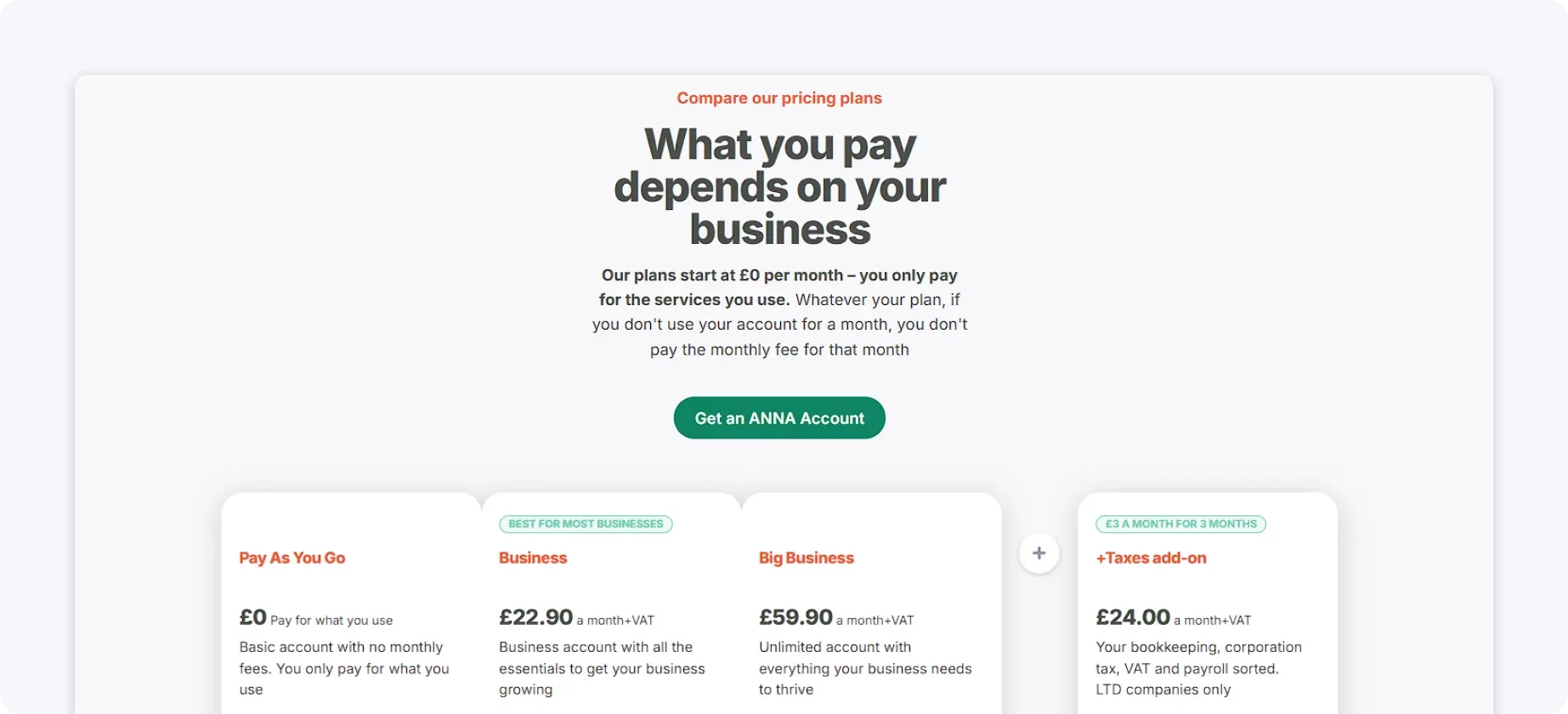
ANNA uses a transparent monthly subscription model with plans tailored to business size and activity. VAT filing is available as part of its tax features, which means that you don’t need to pay separately for bridging or accounting tools.
This bundled approach often works out cheaper than combining a bank account, accounting software, and VAT filing add-ons. Pricing scales with your business as it grows, without forcing you into unnecessary features early on.
2. Xero
Xero is one of the most widely adopted cloud accounting platforms in the UK. It enables businesses to keep digital records, automatically calculate VAT liabilities, and submit VAT returns directly to HMRC through an integrated, HMRC-recognised system.
Xero’s key features include:
- Full MTD compliance for VAT
- Automatic VAT calculations and reminders
- Bank feeds and transaction reconciliation
- Visual dashboards for cash flow and VAT
- Accountant collaboration tools
Xero’s strength lies in its automation and broad integrations. Bank transactions are fetched automatically, VAT return figures are generated from live data, and accountants can easily collaborate within the same system. However, if your business is on the smaller side, Xero can be overly complicated.
Pricing
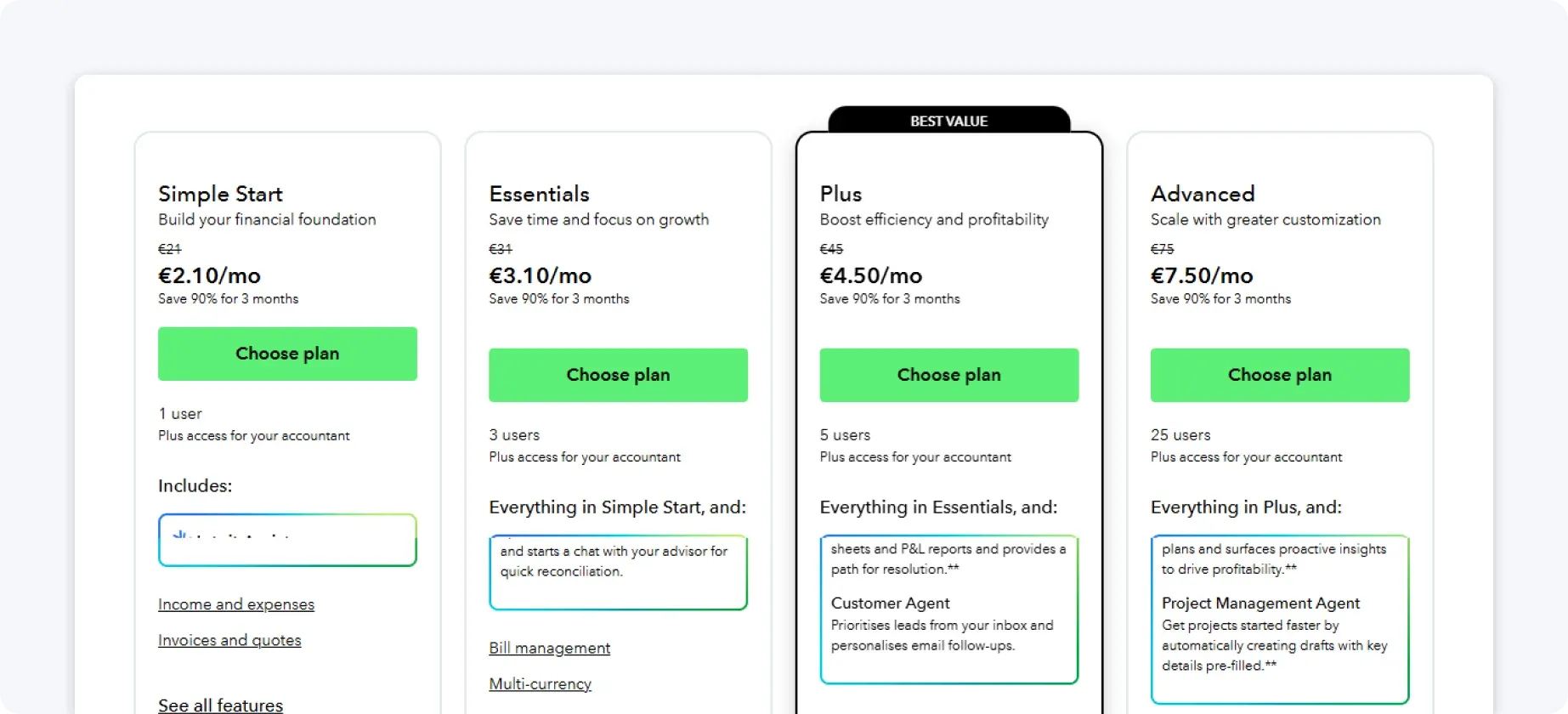
Xero operates on tiered monthly plans, with costs increasing as features and transaction limits expand. VAT submission is included, but higher tiers may be required for growing businesses. Additional apps and integrations can increase the overall monthly cost.
3. QuickBooks Online
QuickBooks Online is a well-known cloud accounting suite with solid MTD support for VAT. It’s designed to help small business owners manage bookkeeping, VAT returns, and financial reporting in one system.
QuickBooks’ key features include:
- HMRC-recognised MTD compliance for VAT
- Invoicing, automated expense tracking, and bank feeds
- VAT return creation and submission in a few clicks
- Mobile apps for accounting on the go
QuickBooks balances ease of use with powerful VAT tools. Features like receipt capture and guided setups reduce reliance on spreadsheets and manual entry.
Pricing
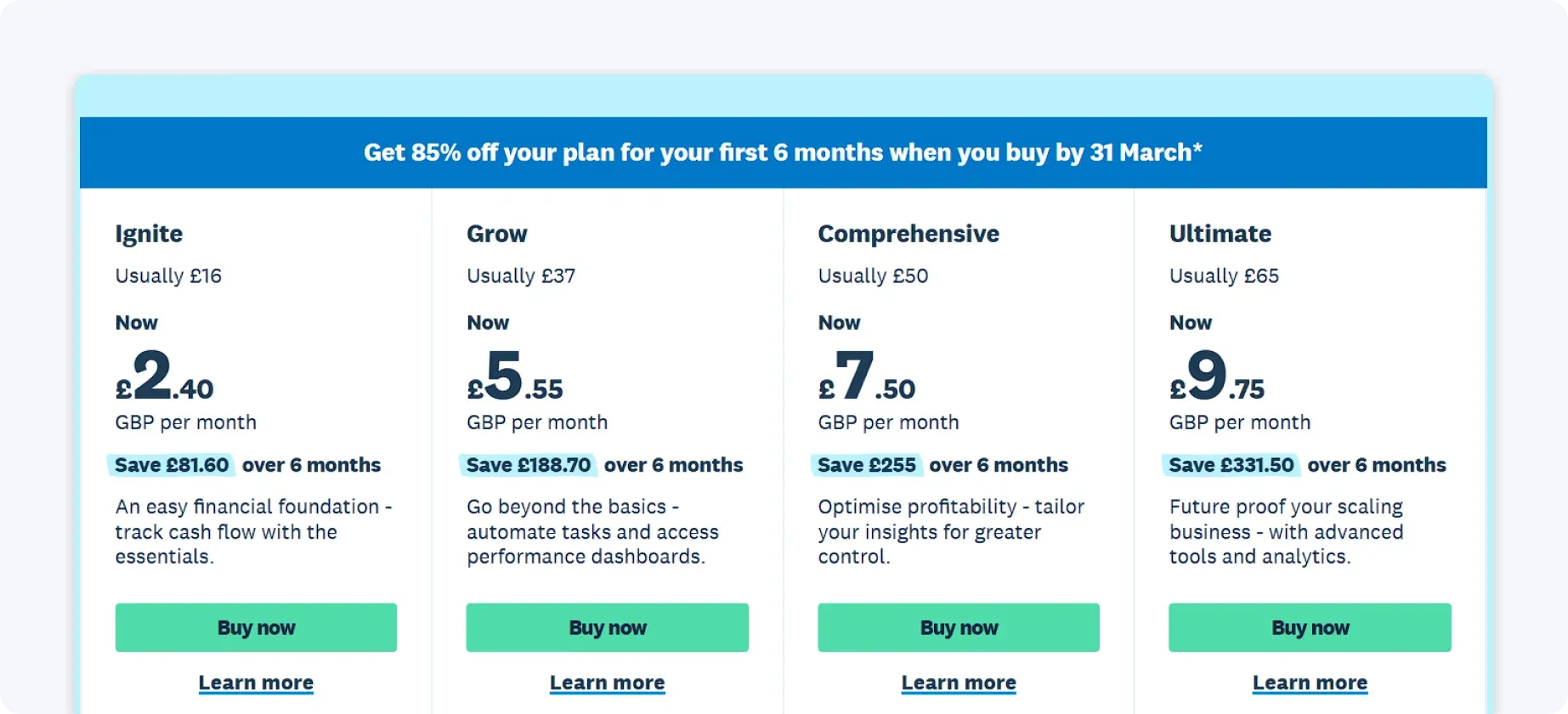
QuickBooks uses a multi-tier subscription model, with VAT features available across plans. Costs rise as you add users, automation, or advanced reporting. Discounts are often offered initially, but standard pricing applies after promotional periods end.
4. FreeAgent
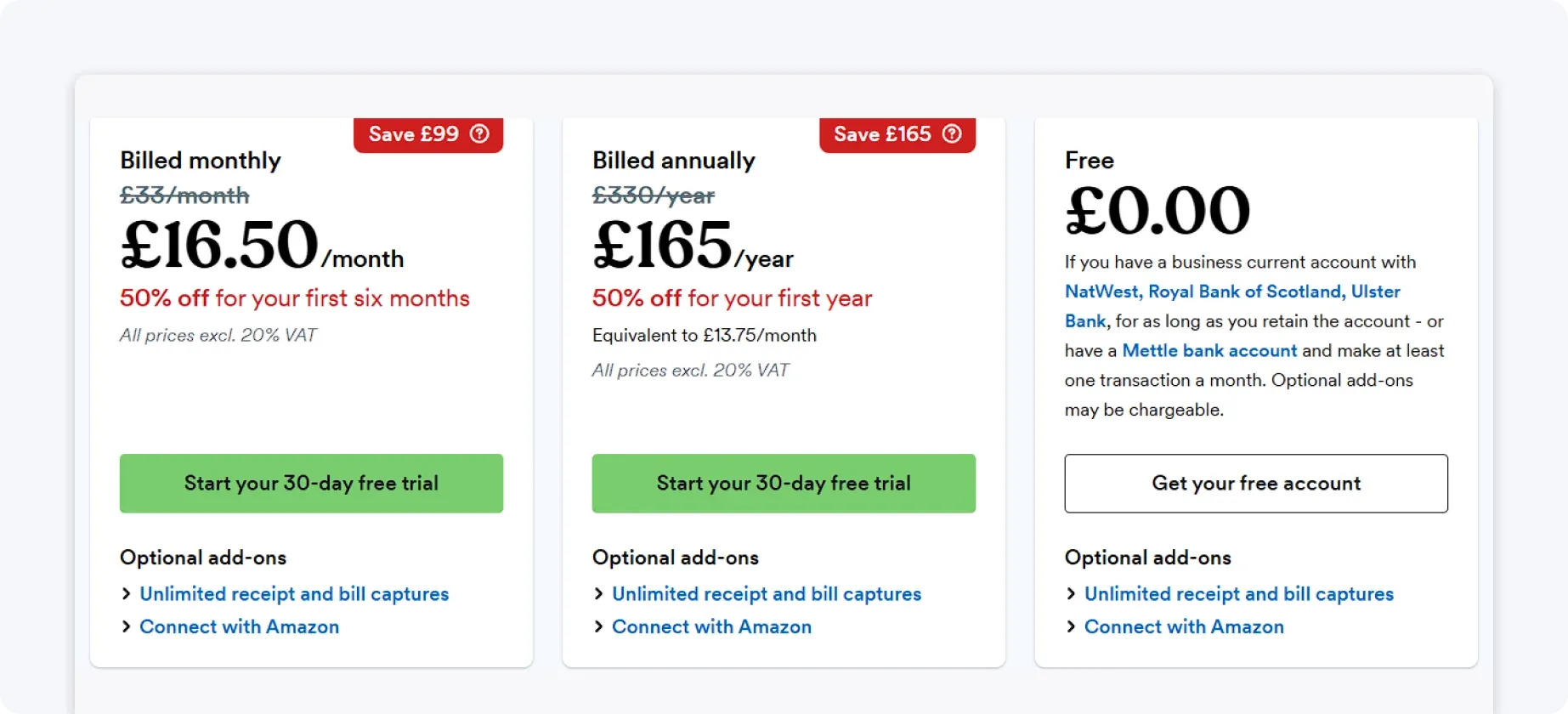
FreeAgent is a UK-focused accounting tool with native MTD support. It’s frequently included for free with certain business bank accounts, such as NatWest and Mettle, making it a cost-effective option for VAT compliance. It provides straightforward VAT automation alongside invoicing and expense tracking.
FreeAgent’s key features are:
- VAT return automation and HMRC submission
- Simple income and expenses tracking
- Automatic bank feeds
- Invoicing and client management
FreeAgent offers strong UK-specific functionality in a clean, easy-to-use interface, making it a good fit for freelancers and small businesses with straightforward finances. Its simplicity helps reduce setup time and day-to-day admin.
However, as a business grows, the platform can feel limiting, with fewer options for advanced reporting, multi-user access, or more complex workflows. Expanding businesses may eventually need a more flexible solution.
Pricing
Without a bank bundle, FreeAgent is offered as a monthly subscription. Pricing is fixed rather than usage-based.
5. Sage Accounting
Sage is one of the most established names in UK accounting software and has long been used by businesses to manage finances, tax, and compliance. Its cloud-based Sage Accounting platform supports Making Tax Digital for VAT as part of a broader ecosystem that includes invoicing, expense management, payroll, and reporting.
For businesses that value a well-known provider with a strong compliance track record, Sage is a familiar and reliable choice.
Sage’s key features include:
- HMRC-approved digital record keeping and VAT filing
- Cloud-based access with mobile support
- Invoicing and expense tracking
- Real-time VAT dashboards and financial reports
It’s particularly suited to companies that expect to scale and need structured processes and controls. That said, the interface and feature set can feel too complex, especially for very small businesses.
Pricing
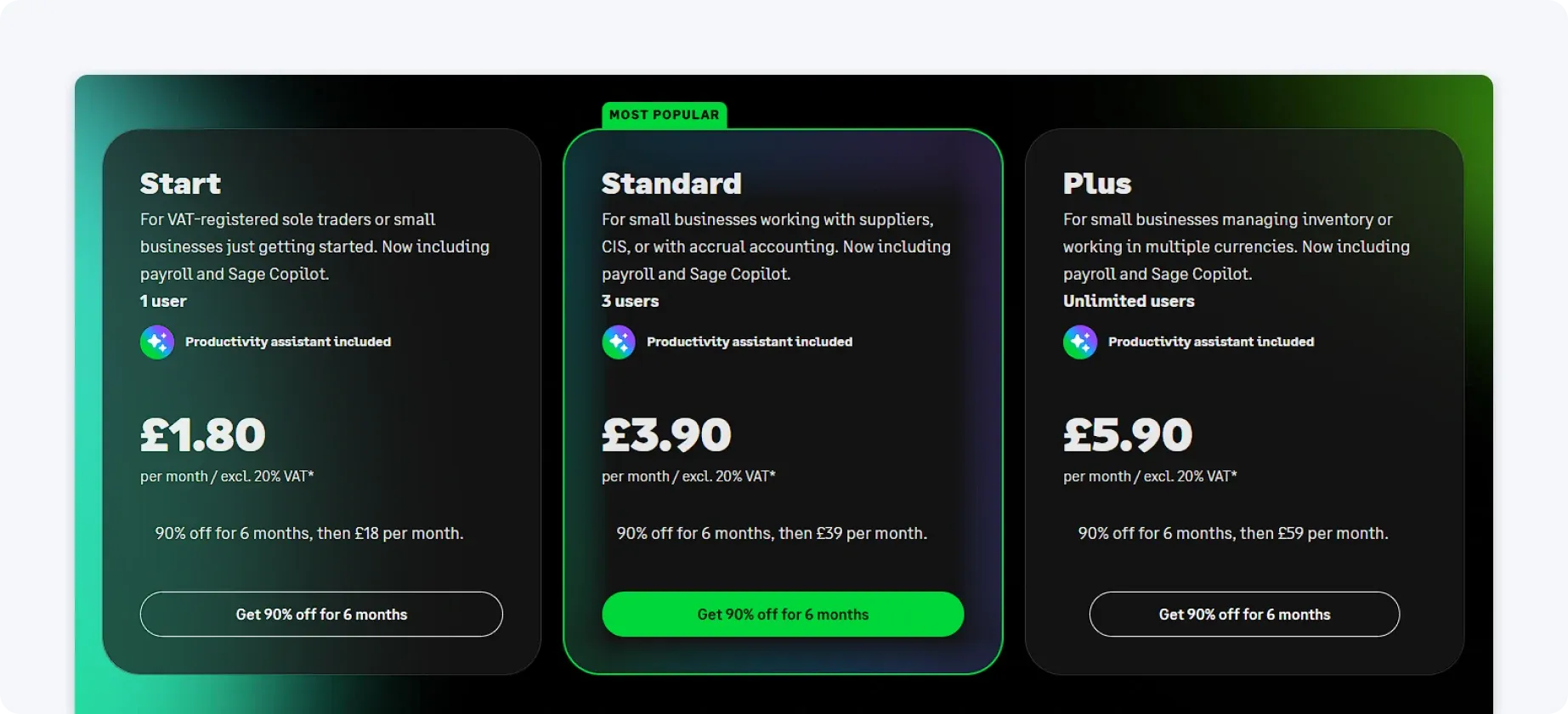
Sage uses tiered pricing based on feature sets and business needs. VAT filing is included, but additional services such as payroll, forecasting, or advanced reporting usually come at an extra cost.
While Sage can scale well with a business, costs and complexity tend to increase as more features and users are added.
6. KashFlow
KashFlow is a UK-based accounting tool designed with VAT reporting and submission at its core. Rather than trying to be an all-encompassing accounting platform, it focuses on helping small businesses manage their bookkeeping and VAT obligations in a straightforward way. This makes it appealing to users who want clarity and simplicity over advanced functionality.
KashFlow’s key features include:
- VAT dashboards and reporting tools
- Cloud accounting with invoicing
- MTD-compatible VAT submission
- Simple setup and navigation
For small businesses that mainly want reliable VAT reporting and submission, KashFlow does the job. However, its features are quite restricted, and businesses with more complex needs may find it limiting over time.
Pricing
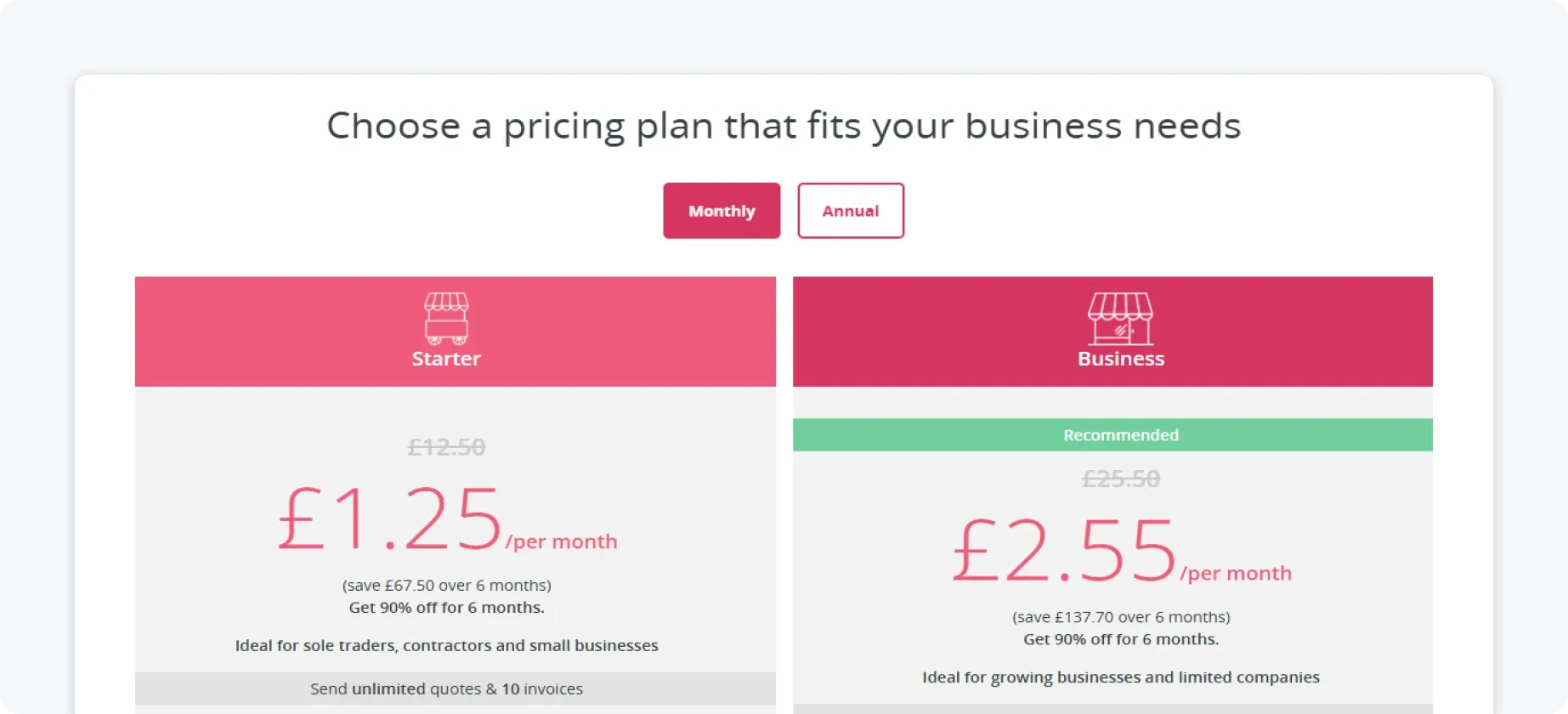
KashFlow is positioned at the lower end of the pricing spectrum, with monthly plans that increase as features are added. VAT functionality is included, but tools like payroll and advanced reporting require higher-tier plans.
7. Andica MTD VAT Software
Andica MTD VAT Software is designed for businesses that prefer to keep their accounting records in spreadsheets but still need to comply with MTD rules. Instead of replacing existing workflows, Andica acts as a bridge between Excel and HMRC, enabling VAT data to be submitted digitally.
Andica’s key features include:
- Spreadsheet import and VAT box mapping
- Direct submission to HMRC via MTD APIs
- VAT reporting and validation
Andica offers a low-cost way to submit VAT returns digitally without switching to full accounting software.
The downside is that it only covers VAT submission, not bookkeeping or financial management. This means ongoing reliance on manual processes and a higher risk of errors as transaction volumes grow.
Pricing
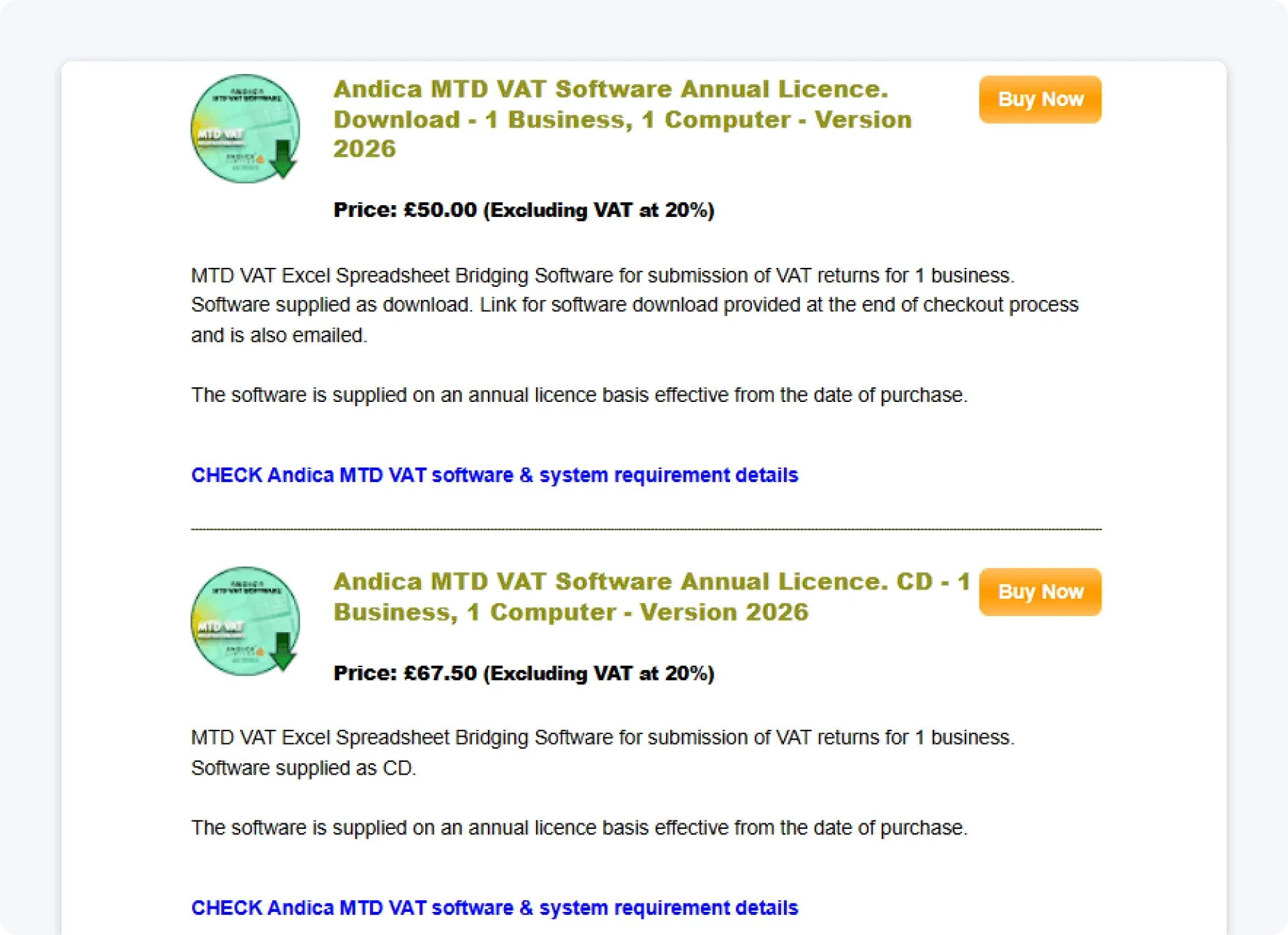
Andica is typically offered as a low-cost licence rather than a monthly subscription, making it one of the cheapest routes to MTD compliance.
How to choose the right MTD software
Selecting the right software for MTD VAT compliance depends on a variety of factors, from the size of your business to the features you need. Here’s what you need to keep in mind when looking for the right fit:
1. Business size and complexity
The scale of your business often determines which software will work best. Smaller businesses and sole traders with straightforward finances may benefit from simpler, cost-effective tools such as FreeAgent, which cover essential VAT filing without unnecessary complexity.
Growing businesses with higher transaction volumes, multiple users, or more complex reporting requirements are better served by full-featured accounting suites like Xero, QuickBooks, or Sage.
2. Integration needs
Consider what other business functions you want your MTD software to handle. Understanding your integration needs helps you avoid paying for features you won’t use.
If you need payroll, project management, or customer relationship management (CRM) integrated, full accounting suites like Xero and QuickBooks provide the most comprehensive solutions.
If your priority is VAT compliance alone, simpler tools such as KashFlow may be sufficient and more cost-effective.
3. Budget and pricing
Free or low-cost software can provide excellent value, particularly for small businesses, but it often comes with limitations in features, scalability, or automation. Full-featured platforms cost more but can save significant time by automating calculations, bank feeds, and reporting.
It’s important to weigh the immediate cost against long-term efficiency gains and the potential need to upgrade as your business grows.
4. Ease of use
An intuitive interface can make a big difference in how efficiently you manage your VAT obligations.
Cloud-based platforms with clear dashboards and automated workflows reduce the risk of errors and simplify submission processes.
By contrast, legacy systems or spreadsheet-based workflows may require more manual input and a higher learning curve, which can increase your admin workload and the likelihood of mistakes.
5. Accountant collaboration
If you work with an accountant or bookkeeper, consider how easily they can access your data.
Most cloud accounting tools allow accountants to log in and review your transactions, VAT returns, and reports in real time. This collaboration can be crucial for outsourcing bookkeeping or making sure your accountant can keep an eye on everything, while tools without multi-user access may complicate the process.
If you want the best MTD for VAT software, choose ANNA
For UK small businesses, sole traders, and freelancers, ANNA stands out as the most practical all-in-one solution.
By combining a business account, automated VAT tracking, and HMRC-recognised MTD submission in a single platform, ANNA removes the stress of multiple tools, spreadsheets, and manual processes.
Its intuitive interface, real-time dashboards, and built-in reminders make VAT compliance effortless, while its scalable plans allow businesses to grow without needing to switch systems.
In short, ANNA not only ensures you stay compliant with MTD, but also saves time, reduces errors, and gives you clear visibility over your finances – making it the smart choice for small businesses navigating VAT in 2026 and beyond.
So, register with ANNA today, and say goodbye to spreadsheets, manual calculations, and missed deadlines.
Read the latest updates
![9 Features to Look for When Choosing MTD Software [+Steps]](https://storage.googleapis.com/anna-website-cms-prod/small_cover_3000_32_ec1954cac9/small_cover_3000_32_ec1954cac9.webp)

![Making Tax Digital Costs: What Will MTD Cost You? [Breakdown]](https://storage.googleapis.com/anna-website-cms-prod/small_cover_3051_a896b063b0/small_cover_3051_a896b063b0.webp)
You may also like

![Offshore Company Registration in the UK [2026 Guide]](https://storage.googleapis.com/anna-website-cms-prod/small_cover_3000_cdb14668f7/small_cover_3000_cdb14668f7.webp)
![How Will Automation Affect Accounting in 2026? [Full Guide]](https://storage.googleapis.com/anna-website-cms-prod/small_cover_3000_11_514d5404c1/small_cover_3000_11_514d5404c1.webp)



![What Is Process Automation in Accounting? [Explained]](https://storage.googleapis.com/anna-website-cms-prod/small_cover_3000_12_7b691ef177/small_cover_3000_12_7b691ef177.webp)

![How to Start a Homecare Business Franchise in the UK [Guide]](https://storage.googleapis.com/anna-website-cms-prod/small_cover_3000_91132e805d/small_cover_3000_91132e805d.webp)
![How to Start a Petrol Station Business in the UK [Guide]](https://storage.googleapis.com/anna-website-cms-prod/small_Cover_3000_Landscaping_Business_Names_Creative_Name_Ideas_78f637cb9c/small_Cover_3000_Landscaping_Business_Names_Creative_Name_Ideas_78f637cb9c.webp)
Open a business account in minutes
