





Learn how to start a homecare business franchise in the UK and build a caring, compliant venture that serves families and grows with you.

If you’ve ever thought about starting a business that makes a real difference in people’s lives, providing homecare services may be the right path.
With 1.4 million people requesting support in 2023–24, up by 4.9% since the year before, and with the ageing population rising, families are struggling to find trustworthy care for their loved ones.
However, starting a homecare business from scratch can feel difficult, especially if you’re new to the care sector.
This is where a homecare franchise can make a real difference. By partnering with an established brand, you benefit from proven systems that allow you to focus on growing your business.
Read on to learn more about how to start a homecare business franchise in the UK.
Key takeaways
- Demand for homecare is growing rapidly
The UK’s ageing population and rising number of people asking for support mean homecare services are in higher demand than ever. This creates an expanding market for new franchise owners. - Regulatory compliance is essential from day one
Registering with Companies House and the Care Quality Commission (CQC) is mandatory before operating. Proper documentation, DBS checks, and policies must be in place to ensure a smooth approval process. - Choose the franchise carefully
Consider factors like franchise fees, support and training, territory exclusivity, and brand reputation. Speaking with current franchisees can reveal practical insights about profitability and day-to-day operations. - Plan your finances thoroughly
Initial investment typically ranges from £30,000 to £150,000, covering franchise fees, working capital, equipment, and professional support. Factoring in payroll, taxes, and regulatory costs early helps prevent surprises. - Leverage tools to simplify administration and compliance
Managing taxes, bookkeeping, payroll, and invoices can be complex, especially when starting out. ANNA keeps everything organised, ensures compliance, and automates time-consuming tasks, letting you focus on growing your homecare business efficiently.
Why is 2026 a good year to start a homecare business franchise in the UK?
Here are some interesting figures that show why starting a homecare franchise in the UK right now is timely and strategic:
1. There are around 36 people aged 65+ for every 100 working-age adults, a shift that shows why demand for care services continues to grow.
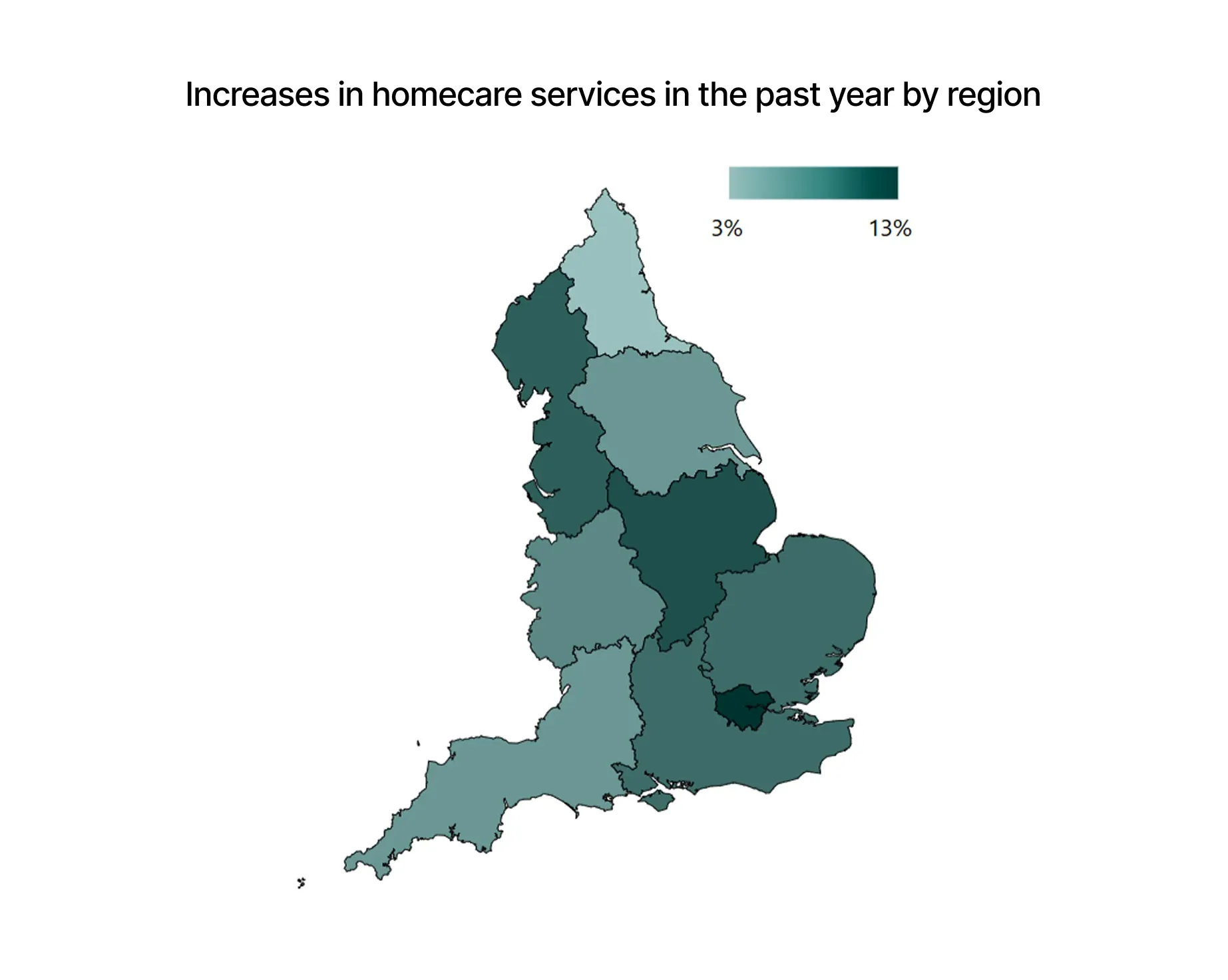
2. The number of homecare services per 100,000 adults aged 65+ is rising, with London showing particularly strong growth, while other regions grow more slowly.
3. Homecare hours delivered climbed more than 5% in the first quarter of 2025 versus the same period in 2024, showing greater activity in the homecare sector.
4. UK homecare services already support over 950,000 older and disabled individuals.
5. Investment in adult social care budgets (up to £4.7 billion allocated in 2024–25) suggests ongoing governmental emphasis on supporting the sector.
What to take from the above statistics:
- Demand for homecare franchises is expanding, especially as more people prefer to stay at home rather than move into residential facilities.
- An increasingly older adult population directly drives future demand for homecare services, creating more potential clients for franchises.
- Growth in service delivery emphasises expanding market capacity.
How to start a homecare business franchise in the UK in 7 steps
If you are ready to establish your new business franchise in the UK, here are the main steps to follow:
1. Set up a limited company
The very first step in starting your homecare business franchise is to set up and register your limited company, the standard structure for liability protection and scalability in this sector.
You can do it via Companies House online by filing the IN01 form online with the company name, directors, SIC code (88100 for homecare), and registered office.
Companies House registration is mandatory for UK homecare franchises because the Care Quality Commission (CQC) will ask for your legal entity details in the Provider form.
2. Register with the CQC
In the UK, homecare services, especially those involving personal care, are highly regulated activities. That means you must be officially registered before you can legally operate.
In England, the main regulator is the Care Quality Commission (CQC). Other UK regulators are:
- Scotland: Care Inspectorate
- Wales: Care Inspectorate Wales
- Northern Ireland: RQIA
Keep in mind that not being registered, or operating before your application is approved, is an offence under the Health and Social Care Act 2008.
What documents do you need to prepare?
During CQC registration, UK homecare providers must submit the following documents:
1. Core forms and plans
- Statement of Purpose (CQC template, detailing services, staff, premises)
- Provider application form (January 2025 version)
- Registered Manager form (May 2025 version)
- A clear DBS (Disclosure and Barring Service) check showing a registered manager is fit and proper to work with vulnerable adults.
- Providers of Personal Care form (proving local need)
- Business plan (1-year financial forecast, SWOT, market research)
- Training plan (induction, ongoing, specialist, overseas carers)
Did you know?
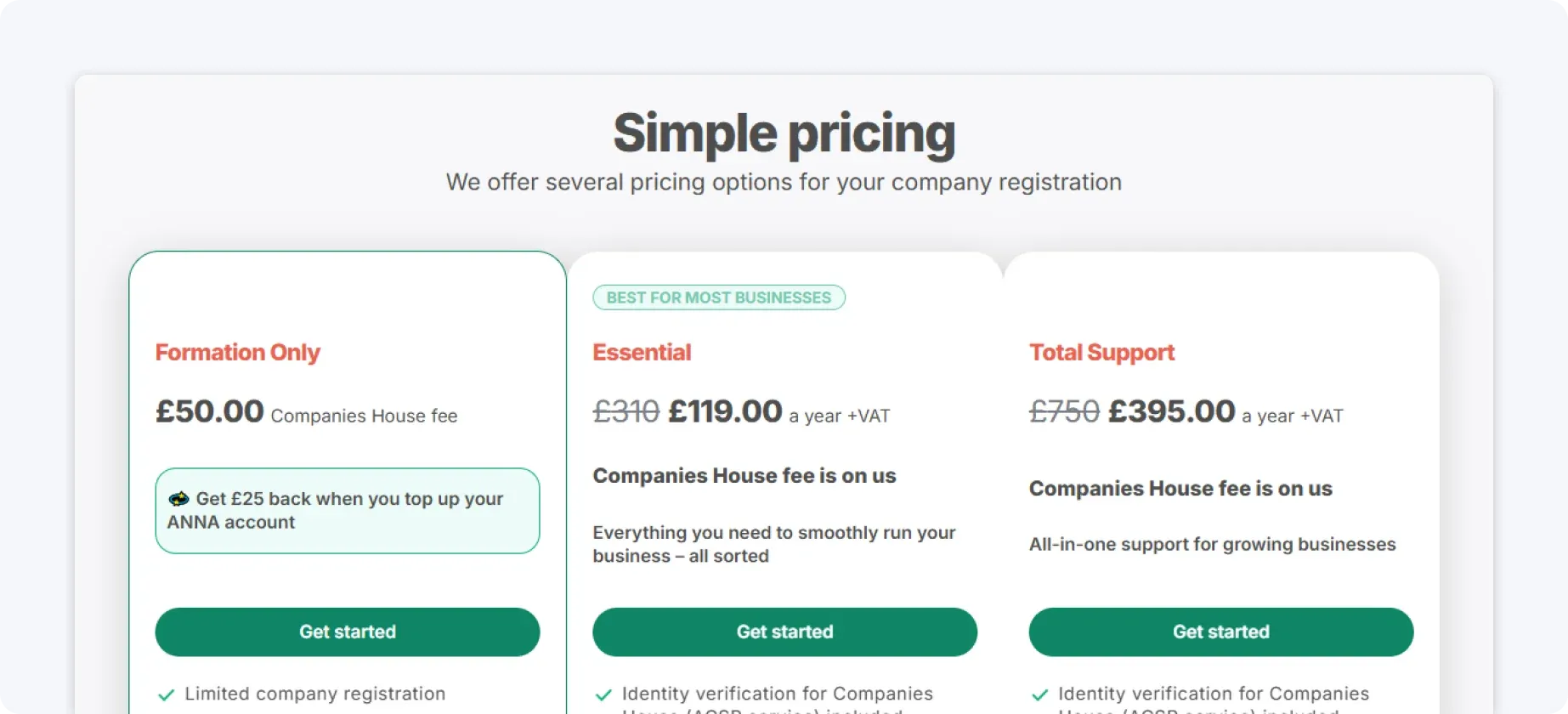
ANNA is an Authorised Corporate Service Provider (ACSP), approved to carry out the required identity checks as part of the company formation process, keeping everything compliant and straightforward.
We also handle the company registration paperwork for you so you can set up your company on the same day, without the usual admin hassle.
2. Mandatory policies
Submit these core policies, customised to your service:
| Policy category | Key examples |
| Safeguarding & safety | Safeguarding adults/children, infection prevention/control, risk management, health/safety |
| Care delivery | Consent, person-centred care, medicines management, equality/diversity/human rights |
| Operations | Recruitment, complaints (including nominated individual overlap), governance/quality assurance, duty of candour |
| User guides | Service User Guide (pricing, safeguarding, complaints process) |
What does the registration process look like?
In July 2025, the CQC introduced a new two-stage registration process to help make applications smoother and more consistent:
- Stage 1: Initial validation: This checks whether your application is complete and accurate. If you’re missing key documents or the forms are filled out incorrectly, your application could be returned.
- Stage 2: Full assessment: Once the initial checks are passed, your application’s details are assessed in depth, including interviews, document reviews, and sometimes site visits.
What happens after you apply?
Once your application passes the initial check, CQC will assess it based on whether your planned services are safe, effective, caring, responsive to people’s needs, and well-led.
The review process usually takes between 12 and 16 weeks, and you’ll be notified of the outcome by email.
Only after registration is confirmed can you legally start providing regulated care services, so it’s crucial not to start operations prematurely.
3. Register for taxes
Homecare franchises in the UK, typically operating as limited companies, face:
- Corporation tax on profits
- PAYE for employees
- National Insurance for employees
- VAT
Franchise fees, initially as capital allowances, ongoing as deductible expenses, reduce taxable profits, while homecare services are often VAT-exempt or zero-rated.
Here’s a quick overview of your tax obligations:
| Tax type | Rate / Details | Payment timing |
| Corporation Tax | 25% for profits over £250,00019% for profits below £50,000 for the 2025/26 tax year | Payable 9 months after the accounting period end |
| PAYE & NI | Employees pay NI at 8% on part of their income, and 2% on higher earnings.Employers pay NI 15% on employee earnings above 5,000 per employee. | Monthly via Real Time Information (RTI) |
| VAT | 20% standard rateMany homecare services are exempt/zero-rated | Register within 30 days of the end of the month in which you exceeded the threshold |
Check this out
With ANNA, your taxes and finances are kept completely organised, compliant, and in one place.
Our solution:
- Calculates the right amounts to pay
- Submits your Corporation Tax to HMRC
- Handles VAT returns
- Manages PAYE if you have staff
- Creates and tracks invoices automatically
- Prepares your year-end financial statements for filing
4. Choose the right franchise
Choosing the right homecare franchise is one of the most important decisions you’ll make. Each franchisor has different costs, support levels, territory models, and reputations, and understanding those differences can save you a lot of headaches later.
4.1. Compare franchise fees and investment levels
Knowing the cost range and what you get for those fees helps you plan your finances and choose a franchise that fits your budget and goals.
Also, look at what support and training you’ll get. Good support typically includes:
- Initial training on operations
- Care standards and compliance
- Ongoing mentoring from the franchisor’s national team
- Help with marketing, recruitment, and technology systems
4.2. Understand territory exclusivity and local opportunities
A well-defined territory means you’ll have exclusive access to a specific area and won’t be competing with another franchisee from the same network in that zone.
Make sure you understand:
- How territories are defined
- Whether they’re truly exclusive
- If there are opportunities to expand into neighbouring territories later
4.3. Speak to current franchisees
Talk to people who are already running a franchise in the brand you’re considering. Current owners can give you real-world insights into:
- How supportive the franchisor really is
- Whether the training and systems work as promised
- What typical challenges they’ve faced (and how they solved them)
- How long it took to become profitable
Franchisees often give the most honest and practical picture, sometimes more so than the franchisor’s marketing materials.
4.4. Research brand reputation and market position
Families are more likely to choose a service they recognise and trust, and local authorities or NHS partners often prefer established providers.
Brands with strong reputations can help you attract clients more easily and build referrals faster, which is crucial when you’re establishing your business.
Top UK franchises
4.5. Evaluate the long-term growth potential
Although you’re still in an early stage, you should think about your long-term goals:
- Do you want to stay small and focus on one territory, or eventually expand to multiple areas?
- Does the franchisor offer multi-unit ownership opportunities?
- Are there resale options (for example, buying an existing territory) if you want to enter the market with an established client base?
5. Calculate costs and investment
UK homecare franchises typically require total initial investments of £30,000 to £150,000, combining franchise fees (£17k to £55k + VAT) and working capital (£50k to £100k) for setup, operations, and early cash flow.
Working capital covers office rent, equipment, marketing, and recruitment, and provides a buffer until profitability, often with 50–70% of the funding provided by banks.
Also, factor in extras, like DBS checks, £3.5k to £8k equipment costs, and £1.5k to £10k for external experts you may need when setting up, such as:
- Solicitors (franchise agreement review, contracts)
- Accountants (business setup, tax planning)
- HR consultants
- Compliance or CQC registration support
Check this out
ANNA’s smart automation and AI handle the time-consuming accounting tasks that would normally require an accountant.
Your books stay accurate, your taxes are filed on time, and your business remains fully compliant, all without the admin burden.
The result is more time to focus on business growth, with costs up to 90% lower than hiring a traditional accountant or paying for separate accounting software.
6. Recruit and train your team
No matter how strong your systems or brand are, the quality of care your clients receive ultimately comes down to the carers you hire and your support system.
Make sure to:
- Carry out enhanced DBS checks for all care staff, managers, and anyone working closely with clients
- Check references and employment history carefully
- Look for experience in care where possible, but also recognise that empathy, reliability, and communication skills matter just as much
Many franchise owners find that hiring for values and training for skills leads to better long-term results, especially in a sector where trust is everything.
Once you’ve hired your carers, proper onboarding is the next step.
Most homecare franchises provide structured training programmes, which can be a huge advantage, particularly if you’re new to the care industry.
Training typically covers:
- Mandatory care standards and safeguarding
- Health and safety and infection control
- Moving and handling
- Medication awareness
- Company policies and care expectations
7. Market your homecare business
Even with a recognised franchise brand, local marketing plays a huge role in how quickly you build your client base.
Homecare is a relationship-driven business, so some of your most effective marketing will happen offline.
You should focus on building strong connections with:
- GP practices and hospital discharge teams
- Social workers and local authority contacts
- Community groups, charities, and faith organisations
These relationships can become a steady source of referrals over time, especially once your service develops a strong reputation.
However, it’s also important to have a visible online presence. Families often search online when they urgently need care, so you want your business to be easy to find.
Doing so includes:
- A local website page provided by the franchisor
- An up-to-date Google Business Profile
- Positive client reviews and testimonials
- Social media to show your values, team, and community involvement
Most franchises provide marketing templates, branding, and guidance, which makes this much easier to manage, even if marketing isn’t your background.
How to start a homecare business franchise in the UK with ANNA?
Launching a homecare business franchise includes many moving parts, from registering your business and handling invoices to managing taxes, payroll, and day‑to‑day cash flow.
That’s where ANNA steps in.
ANNA is an all‑in‑one business account and admin assistant that combines company registration with tools to handle invoices, expenses, bookkeeping, and taxes, making it much easier to stay organised without extra software or heavy admin.
With our tools, you can:
✨ Register a company within a day
✨ Open an ANNA business account in about 10 minutes
✨ Get help with bookkeeping and tax compliance with built-in tax tools
✨ Stay on top of staff payroll, equipment purchases, training costs, mileage, and other expenses by automatically categorising them
✨ Provide payment links and QR codes for clients to pay you instantly.
Try ANNA today to simplify your admin and taxes while you build your homecare business franchise.
FAQ:
1. How much does it cost to start a homecare franchise in the UK?
The initial investment usually ranges from £30,000 to £150,000, depending on the franchise, territory size, and working capital.
This includes franchise fees, office setup, equipment, recruitment, and professional support. Planning carefully for these costs ensures you can operate smoothly until your business becomes profitable.
2. Do I need to be registered with the CQC to start a homecare business?
Yes, you do. Any service providing personal care in the UK has to be registered with the CQC or the relevant regulator in Scotland, Wales, or Northern Ireland.
To do so, you have to submit detailed documentation, policies, and DBS checks, and you can’t legally start providing regulated care until your registration is approved.
3. How can I manage taxes and payroll efficiently as a new franchise owner?
Managing finances, payroll, and compliance can be complex, especially in the early stages.
Using an all-in-one tool like ANNA can help automate tax calculations, handle PAYE, VAT, and invoices, and keep your books compliant, freeing up time to focus on running and growing your homecare business.
Read the latest updates

![What Is the Threshold for Making Tax Digital? [Guide]](https://storage.googleapis.com/anna-website-cms-prod/small_cover_3057_f0f2ffd268/small_cover_3057_f0f2ffd268.webp)


![Making Tax Digital for Freelancers [Complete 2026 Guide]](https://storage.googleapis.com/anna-website-cms-prod/small_cover_3000_25_15d6713572/small_cover_3000_25_15d6713572.webp)
![How to Sign Up for Making Tax Digital [A Detailed Guide]](https://storage.googleapis.com/anna-website-cms-prod/small_cover_3031_86f7f6f18a/small_cover_3031_86f7f6f18a.webp)
![MTD ITSA for Landlords [+6 Software Options Compared]](https://storage.googleapis.com/anna-website-cms-prod/small_cover_3025_77131ed4c8/small_cover_3025_77131ed4c8.webp)
![How to Choose the Best MTD Bridging Software [+Comparison]](https://storage.googleapis.com/anna-website-cms-prod/small_cover_3000_22_ba8f9dee9d/small_cover_3000_22_ba8f9dee9d.webp)


You may also like
![How to Start a Self-Employed Business in the UK [Guide]](https://storage.googleapis.com/anna-website-cms-prod/small_Cover_3000_Landscaping_Business_Names_Creative_Name_Ideas_fe5b6edef1/small_Cover_3000_Landscaping_Business_Names_Creative_Name_Ideas_fe5b6edef1.webp)
![How to Start an Electrician Business in the UK [Guide]](https://storage.googleapis.com/anna-website-cms-prod/small_Cover_3000_How_to_Start_a_Car_Detailing_Business_Successfully_74488a6268/small_Cover_3000_How_to_Start_a_Car_Detailing_Business_Successfully_74488a6268.webp)
![How to Start a Petrol Station Business in the UK [Guide]](https://storage.googleapis.com/anna-website-cms-prod/small_Cover_3000_Landscaping_Business_Names_Creative_Name_Ideas_78f637cb9c/small_Cover_3000_Landscaping_Business_Names_Creative_Name_Ideas_78f637cb9c.webp)
![How to Start a Currency Exchange Business in the UK [Guide]](https://storage.googleapis.com/anna-website-cms-prod/small_Cover_3000_Landscaping_Business_Names_Creative_Name_Ideas_daad2f9e2a/small_Cover_3000_Landscaping_Business_Names_Creative_Name_Ideas_daad2f9e2a.webp)


![How to Start a Bakery Business in the UK [2026 Guide]](https://storage.googleapis.com/anna-website-cms-prod/small_Cover_3000_How_to_Start_a_Copywriting_Business_from_Scratch_e47ea6b2a6/small_Cover_3000_How_to_Start_a_Copywriting_Business_from_Scratch_e47ea6b2a6.webp)

![How to Start a Hand Car Wash Business in the UK [Full Guide]](https://storage.googleapis.com/anna-website-cms-prod/small_Cover_3000_Landscaping_Business_Names_Creative_Name_Ideas_43cd23898e/small_Cover_3000_Landscaping_Business_Names_Creative_Name_Ideas_43cd23898e.webp)


Open a business account in minutes
