





Learn everything you need to know about offshore company registration in the UK and understand the steps, rules, and taxes you need to stay compliant.

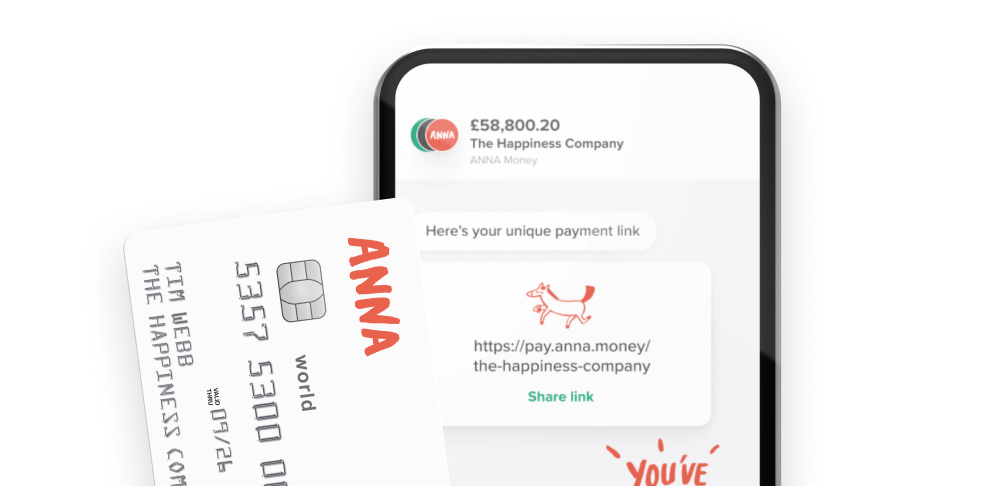
- In this article
- What does an offshore company mean in the UK?
- Who can register an offshore company in the UK?
- Offshore company registration in the UK: 3 key steps to take
- What are the 2026 UK compliance changes for offshore companies?
- How much does it cost to get your offshore company up and running in the UK?
- How to do offshore company registration in the UK with ANNA?
- FAQ:
Are you thinking about setting up an offshore company, but feel confused about where and how to start?
Choose the wrong structure? You overpay in taxes. Skip compliance? Your bank account gets frozen. Pick the wrong country? Clients don’t trust you, and regulators start asking questions.
So, how to start an offshore company in the UK and ensure it’s legal and compliant?
Read on to learn more about offshore company registration in the UK so you can do it the right way from day one.
Key takeaways
- UK offshore companies aren’t traditional tax havens
UK-registered limited companies owned by non-residents and managed from abroad function like offshore structures but with stronger credibility, easier banking, and higher transparency. - Non-residents can fully own and run a UK company
You only need one director (16+) and one shareholder, which can be the same person. Directors must complete the mandatory identity verification, but there are no residency or nationality restrictions for shareholders. - The company formation process is fast but requires attention to detail
Key steps include choosing a unique company name, providing a real UK-registered office address, and submitting core documents. - Tax residency depends on where decisions are made, not nationality
If your company is centrally managed and controlled from the UK, or incorporated in the UK, it will be taxed on worldwide profits. Corporation Tax in 2026 remains 25% for earnings over £250,000 and 19% for profits up to £50,000, with marginal relief in between. Keep decisions in the UK to avoid overseas reporting requirements as well. - ANNA simplifies offshore company setup and compliance
From same-day company registration to automated VAT, PAYE, Company Accounts, and Corporation Tax filings, ANNA keeps your documents safe, books accurate, and invoices tracked. Using ANNA is a cost-effective, all-in-one solution to get your UK offshore company up and running without the usual headaches.
What does an offshore company mean in the UK?
The UK isn’t a classic offshore tax haven like the Cayman Islands or Belize. However, UK companies are offshore when:
- The owner is a non-UK resident
- The business operates internationally
- The company is registered in the UK but managed from abroad
In practice, this setup works like an offshore structure, but with higher credibility and better banking access.
| Features | The UK | Classic offshore |
| Reputation | High | Often low |
| Banking | Easier | Harder |
| Transparency | High | Low |
| Costs | Moderate | Varies |
| Compliance | Strict | Sometimes lax |
Who can register an offshore company in the UK?
You don’t need to live in the UK to own or run a UK company.
Non-UK residents can be both directors and shareholders, and you only need one director (aged 16 or over) and one shareholder, which can be the same person.
There’s no UK residency requirement for directors, but from 18 November 2025, all directors have to complete a mandatory identity verification.
Shareholders also face no nationality restrictions, and shares are issued upon incorporation.
Offshore company registration in the UK: 3 key steps to take
Here are the key steps you need to follow for offshore company registration in the UK.
1. Register a limited company
The most popular business structure for offshore companies is a limited company, accounting for over 90% of all corporate bodies.
The online registration via Companies House doesn’t take long, and you can complete it within one day if you have all the necessary documents and meet the requirements.
So what’s necessary to get started?
1.1. Choose a company name
The first step in the process is to choose a company name that:
- Must be unique and not too similar to an existing business
- Shouldn’t infringe on trademarks
- Can’t include restricted, misleading, or offensive words without proper approval
You’ll also need to include the correct legal suffix, such as ‘Ltd’ or ‘Limited’.
Having a few backup names ready is a smart move in case your first choice is unavailable. With ANNA’s Free Company Name Checker, you can see if your name is available – and find alternatives if it’s not.
1.2. Register office address
Your registered office must be a real, physical address in the UK (PO Boxes aren’t allowed), and it must be in the same UK jurisdiction as your company’s registration.
If the address doesn’t meet these rules, Companies House can change it or even strike your company off.
Keep in mind that a virtual office address will do as well. No matter what you choose, you have to provide ID documents, such as a passport and proof of address, for verification.
Did you know?
ANNA’s virtual office service lets you use a Prime London address for official mail, keeps your personal address private, scans and emails your mail the same day, and covers all the essential taxes small businesses need.
1.3. Prepare necessary documents
You’ll have to submit a few core documents to Companies House, and non-residents will need to provide personal ID, too.
The main paperwork includes:
- Form IN01 with your company details, registered office address, directors, shareholders, share capital, and Persons with Significant Control (PSC)
- A Memorandum of Association confirming the shareholders
- Articles of Association that outline how the company runs
Identity checks are now required under the new Economic Crime and Corporate Transparency Act (ECCTA) rules.
ANNA is an official Authorised Corporate Service Provider (ACSP), approved by Companies House to carry out identity checks for UK company formations.
As a result, the company setup process is quicker, easier, and more reliable for new businesses.
2. Register with Companies House
Non-UK residents can submit UK company registrations digitally via Companies House WebFiling or ACSPs.
If you opt for WebFiling, you need to:
- Enter company details via the IN01 form
- Upload scanned ID proofs
- Pay £100 digitally instead of £50, starting from 1 Feb 2026
If you decide to go with an ACSP like ANNA, your company will be incorporated and your business account opened by the end of the day.
We handle the company registration paperwork for you and register your business for Corporation Tax at the same time, so everything is taken care of in one go.
3. Register for taxes
The key thing to understand when running an offshore company is tax residency. It’s not about your nationality – it’s about where the big decisions are made.
If your company is centrally managed and controlled from the UK, it’ll be taxed there on its worldwide profits.
If it’s run from abroad, you may not owe UK tax on non-UK income, but you’ll need to demonstrate there’s no UK permanent establishment.
As for tax rates in 2026, nothing has changed dramatically. Corporation Tax remains 25% on profits over £250,000 and 19% on earnings up to £50,000, with marginal relief in between.
These rates have applied since 1 April 2024, and cover any profits that are considered taxable in the UK.
Other taxes to keep in mind:
- VAT: If your offshore company makes taxable supplies in the UK exceeding the £90,000 threshold over 12 months or is expected within 30 days
- PAYE: If you employ staff in the UK, requiring payroll tax deductions regardless of company location
What are the 2026 UK compliance changes for offshore companies?
If you’re running a UK company from abroad, 2026 includes extra compliance under ECCTA.
These rules, building on what started in 2025, are all about identifying fraud, improving transparency, and keeping cross-border business above board.
| Category | Key changes |
| ECCTA updates | ID verification for directors/PSCs becomes compulsory from 18 November 2025.Full digital enforcement is introduced via Companies House.‘Failure to Prevent Fraud’ offence holds companies liable for fraud by associates/offshore affiliates. |
| Sanctions/AML | The Unified sanctions list (OFSI consolidation) intensifies offshore screening and reduces evasion via trusts/shells. Enhanced AML/CFT due diligence mandates real-time monitoring/third-party data for cross-border ops. |
| Filing/Fees | Fees double from 1 Feb 2026 (incorporation £100, confirmations £50).Filings are fully digitised.Register maintenance shifts fully to the public register by late 2025. |
| Tax/Data | Offshore trusts lose remittance basis 2025–26, taxing foreign income for UK beneficiaries.GDPR data transfers need encryption/audits for offshore flows. |
How much does it cost to get your offshore company up and running in the UK?
Starting an offshore UK company can be affordable, but the numbers vary, especially now that Companies House has updated its fees for 2026.
Whether you’re doing it yourself or using a service, knowing the realistic costs ahead of time helps you budget correctly and avoid surprises.
Here’s a breakdown of the key expenses you’re likely to face when forming and maintaining an offshore company in the UK.
| Cost category | Typical price |
| Companies House incorporation fee (standard online) | ~£50 → rising to £100 (1 Feb 2026) |
| Same‑day digital incorporation (optional) | ~£78 → ~£156 (1 Feb 2026) |
| Confirmation statement (annual) | ~£34 → ~£50 (1 Feb 2026) |
| Registered office address service | £50–£150+ per year |
| Formation agent/package (optional) | £15–£150+ |
| Accounting & bookkeeping (annual) | £300–£1,200+ |
| Business bank account setup (optional) | £0–£200 |
| VAT/payroll setup (optional) | £50–£150 |
How to do offshore company registration in the UK with ANNA?
ANNA is an all-in-one business account for money, invoicing, expenses, bookkeeping, and taxes.
We take the hassle out of bookkeeping, taxes, and compliance, at a fraction of the cost, and up to 90% cheaper than a traditional accountant or expensive accounting software.
Our solution:
✨Enables same-day company registration, including the Companies House fee
✨ Automatically handles your VAT, PAYE, Company Accounts, and Corporation Tax filings, keeping everything HMRC-compliant
✨ Keeps all your documents safe, sorted, and accessible
✨ Calculates the most tax-efficient amount you owe
✨ Creates and tracks invoices automatically
✨ Keeps your books in perfect order 24/7
Try ANNA today to see how you can simplify your UK offshore company setup, all from one place.
FAQ:
1. Can non-UK residents register a UK company?
Yes, they can. Non-residents can be directors and shareholders, and you only need one of each to start.
Starting from 18 November 2025, directors must complete mandatory identity verification, but there’s no requirement to live in the UK.
2. How long does it take to set up a UK offshore company?
If all documents are ready, online registration via Companies House can be completed within one day.
With ANNA, you can get the same-day company incorporation and business account setup.
3. Will my UK offshore company have to pay taxes in the UK?
It depends on where your company is centrally managed and controlled. If your key decisions are made in the UK, you’ll be taxed on worldwide profits.
If it’s run entirely from abroad, UK tax may not apply to non-UK income, but you’ll need to prove there’s no UK permanent establishment.
Read the latest updates
![9 Features to Look for When Choosing MTD Software [+Steps]](https://storage.googleapis.com/anna-website-cms-prod/small_cover_3000_32_ec1954cac9/small_cover_3000_32_ec1954cac9.webp)


![Making Tax Digital Costs: What Will MTD Cost You? [Breakdown]](https://storage.googleapis.com/anna-website-cms-prod/small_cover_3051_a896b063b0/small_cover_3051_a896b063b0.webp)


You may also like
![How to Start a Self-Employed Business in the UK [Guide]](https://storage.googleapis.com/anna-website-cms-prod/small_Cover_3000_Landscaping_Business_Names_Creative_Name_Ideas_fe5b6edef1/small_Cover_3000_Landscaping_Business_Names_Creative_Name_Ideas_fe5b6edef1.webp)
![How to Start a Homecare Business Franchise in the UK [Guide]](https://storage.googleapis.com/anna-website-cms-prod/small_cover_3000_91132e805d/small_cover_3000_91132e805d.webp)
![How to Start a Petrol Station Business in the UK [Guide]](https://storage.googleapis.com/anna-website-cms-prod/small_Cover_3000_Landscaping_Business_Names_Creative_Name_Ideas_78f637cb9c/small_Cover_3000_Landscaping_Business_Names_Creative_Name_Ideas_78f637cb9c.webp)
![How to Start a Currency Exchange Business in the UK [Guide]](https://storage.googleapis.com/anna-website-cms-prod/small_Cover_3000_Landscaping_Business_Names_Creative_Name_Ideas_daad2f9e2a/small_Cover_3000_Landscaping_Business_Names_Creative_Name_Ideas_daad2f9e2a.webp)

![How Will Automation Affect Accounting in 2026? [Full Guide]](https://storage.googleapis.com/anna-website-cms-prod/small_cover_3000_11_514d5404c1/small_cover_3000_11_514d5404c1.webp)
![How to Start a Hand Car Wash Business in the UK [Full Guide]](https://storage.googleapis.com/anna-website-cms-prod/small_Cover_3000_Landscaping_Business_Names_Creative_Name_Ideas_43cd23898e/small_Cover_3000_Landscaping_Business_Names_Creative_Name_Ideas_43cd23898e.webp)



Open a business account in minutes
