
How to Start a Delivery Business in the UK [2026 Guide]


Explore how to start a delivery business so you can plan your setup, manage compliance, attract customers, and build a profitable operation.

In this article
- Key points
- Why is starting a delivery business in the UK a smart move?
- The UK delivery market at a glance: opportunities & trends
- How to start a delivery business in 3 key steps
- What it really costs to start a delivery business and pick the right vehicle
- How to attract your first customers when doing a delivery business?
- Which customer segments offer the highest lifetime value for delivery startups?
- What do you need to know about taxes when starting your delivery business?
- 6 Common mistakes to avoid when starting a UK delivery business
- How to start your delivery business hassle-free with ANNA?
A delivery business is more than having a van and a few parcels.
There are licenses, insurance, fuel costs, routes, competition, and, of course, customers who expect lightning-fast service.
Without a clear plan, it’s easy to waste time and money trying to figure it all out.
So, where do you even start?
Read on to learn how to start a delivery business so you can get your business on the road.
Key points
- Delivery demand is booming in the UK 📦
The UK delivery market is growing fast, driven by online shopping, food delivery, and same-day logistics. Consumers increasingly expect fast, convenient doorstep services, making it a strong entry point for new businesses. - Low barrier to entry with high flexibility 🚗
You can start small using a single vehicle (car, bike, or van) without major upfront investment. This makes it accessible, flexible, and scalable as demand grows. - Strong opportunity in local and niche markets 📍
While big companies dominate nationally, there is still major opportunity in local areas, rural regions, and niche services like eco-friendly or specialist deliveries where speed and personalisation matter. - Growth potential depends on smart scaling and compliance 📈
Success comes from building gradually: adding vehicles, hiring drivers, and expanding coverage while staying compliant with licensing, insurance (like hire and reward cover), and operational rules. - Costs, tax, and setup matter from day one 🚀
Startup costs vary widely depending on scale, but managing expenses, VAT, insurance, and tax obligations early is critical. Tools like ANNA help streamline company setup, invoicing, and tax management so you can focus on growing your delivery business instead of admin.
Why is starting a delivery business in the UK a smart move?
If you’ve ever thought about starting your own delivery business, there’s never been a better time to do it.
The UK delivery scene is booming (we’ll tackle the statistics later on), and there’s plenty of room for new players to jump in.
1. Deliveries are in high demand
People want their shopping, takeaways, and even groceries brought straight to their door fast.
The UK’s delivery market has exploded over the past few years, and it’s still growing.
Whether it’s Amazon packages, restaurant meals, or same-day local orders, there’s a constant demand for reliable delivery services.
2. You don’t need a fortune to start
One of the best parts? You don’t need a massive budget or a big fleet to get going. You can start with just one person, one vehicle, and a solid plan.
You can even use your own car, scooter, or bike to begin and expand over time.
3. Total flexibility and independence
Being your own boss comes with serious perks. You can set your own hours, choose who you work with, and build a schedule that fits your life. Whether you want to work solo or partner with companies like Amazon or DPD, you’re in control.
4. Plenty of untapped opportunities
Sure, big names dominate national delivery, but there are still loads of opportunities in local markets.
Small towns, rural areas, and niche services, such as eco-friendly or same-day deliveries, are wide open for new businesses that can meet local needs better than the big guys
5. Room to grow and keep growing
Once you’re up and running, you can add more drivers and more vehicles or even expand your service area.
With online shopping and the gig economy showing no signs of slowing down, the future of delivery looks seriously bright.
The UK delivery market at a glance: opportunities & trends
The delivery industry in the UK is only getting bigger. From couriers to food delivery, there’s a huge demand for same-day and next-day services.
In fact, the UK food delivery market alone is expected to hit £14.3 billion throughout 2025, growing about 3.1% every year.
Our love for convenience is fueling that growth. I mean, who doesn’t like a quick doorstep delivery, and the rise of slick, easy-to-use delivery apps.
Big cities like London lead the way.
The capital accounts for around 21% of all delivery orders. No surprise, given its dense population, higher spending power, and love for all things digital.
The biggest drivers behind this growth are younger, tech-savvy consumers aged 25 to 34 who order frequently and are happy to pay for premium convenience. Delivery has become such a normal part of life that it now makes up nearly 20% of the entire UK food market, proof that it’s no longer just a trend, but a lifestyle habit.
How to start a delivery business in 3 key steps
Got an idea, some drive, and a set of wheels? Perfect. Let’s see what it takes to start your delivery business.
1. Legal requirements & company setup
When you’re setting up your delivery business, you’ve got two main options: start as a sole trader or register a limited company.
- Going the sole trader route is quick and easy, but keep in mind it means you’re personally responsible for any debts or liabilities.
- A limited company, on the other hand, gives you extra protection and can make your business look more professional, especially handy if you plan to go after bigger contracts.
Whichever option you choose, you’ll need to register your business name.
Also, you’ll need to register your business with HMRC for sole traders, and if you’re setting up a limited company, with Companies House.
Also, for limited companies, you’ll need to open a business bank account.
✨ The great thing is that ANNA lets you handle it all in one place.
You can set up your company online in just a few hours with free same-day company formation, and once you’re registered, your UK business account is ready to use straight away.
In addition, our free company name checker helps you see which name is available or find some great alternatives if your name is taken.
Search for your perfect company name
Not totally sure how the registration process works? No problem.
We walk you through everything, from getting your business officially registered to setting up your account and even sorting out Self Assessment Tax and VAT when the time comes.
💡 If your delivery vehicles weigh more than 3.5 tonnes, you’ll need to apply for a Goods Vehicle Operator Licence before hitting the road.
2. Vehicle insurance & registration
Before you hit the road with your delivery business, it’s essential to get your vehicle insurance and registration sorted.
It keeps you legal, protected, and ready to start delivering.
2.1. Vehicle insurance: Hire and Reward
If you’re planning to deliver goods for payment, you’ll need “hire and reward” vehicle insurance. This type of cover is designed specifically for vehicles that transport goods for money, and it isn’t included in a standard personal car insurance policy.
Without it, your regular insurance won’t count while you’re on a delivery run, which could land you in serious trouble.
We’re talking fines of up to £300, six to eight penalty points, vehicle seizure, and even disqualification in some cases.
Most delivery platforms, like Uber Eats and Deliveroo, won’t even let you start delivering without proof of this insurance.
It’s also worth looking into a few extra types of cover:
- Goods in transit insurance: Protects your parcels if they’re lost, stolen, or damaged while you’re delivering.
- Public liability insurance: Covers you if someone gets injured or something is damaged while you’re on the job.
- Employers’ liability insurance: Legally required if you decide to hire staff.
💡 Good to know:
When you’re out on deliveries, it’s super important to have the right documents with you.
It’ll save you a lot of hassle if you ever get stopped. To stay on the safe side and avoid fines or delays, make sure you’ve got:
- Your insurance certificate (showing your hire and reward cover)
- Your vehicle logbook (V5C)
- Your courier app ID or contract details
- Your MOT certificate (if your vehicle needs one).
2.2. Vehicle registration
Before you hit the road with your delivery vehicle in the UK, it must be properly registered with the Driver and Vehicle Licensing Agency, DVLA.
Otherwise, it’s illegal to drive on public roads.
Here’s what you need to get your vehicle registered:
- Proof of identity, such as a UK passport, full UK driving licence, or a biometric residence permit.
- Proof of UK address: recent utility bills, bank statements, or council tax bills work.
- Vehicle logbook (V5C) showing the current registered keeper, or a completed V62 form if the logbook is missing.
- Valid insurance certificate covering your vehicle.
- MOT certificate: required for vehicles over three years old to prove they’re roadworthy.
- Vehicle tax or evidence of an exemption.
If your vehicle is imported, there are a few extra steps: you’ll need to notify HMRC, pay any VAT and customs duties, and possibly pass an Individual Vehicle Approval (IVA) test.
The DVLA might also inspect the vehicle before finalising registration.
There’s a registration fee, usually around £55, and once it’s processed, you’ll get a V5C registration certificate.
This document is a must. It proves you legally own the vehicle, keeps it taxed, and is key for identification.
3. Licensing and compliance
Every delivery vehicle on UK roads needs to be roadworthy, and the best way to prove it is through a valid MOT certificate.
Keeping up with regular maintenance and inspections also keeps you, your vehicle, and everyone else on the road safe.
Health and safety regulations
If you’re hiring drivers, especially younger or new drivers, health and safety are key.
Here’s what to focus on:
- Make sure every driver has a valid license for the type of vehicle they’ll be driving.
- Give proper training on things like safe loading, driving hours, and vehicle operation.
- Carry out risk assessments and set up safe work systems to prevent accidents or injuries.
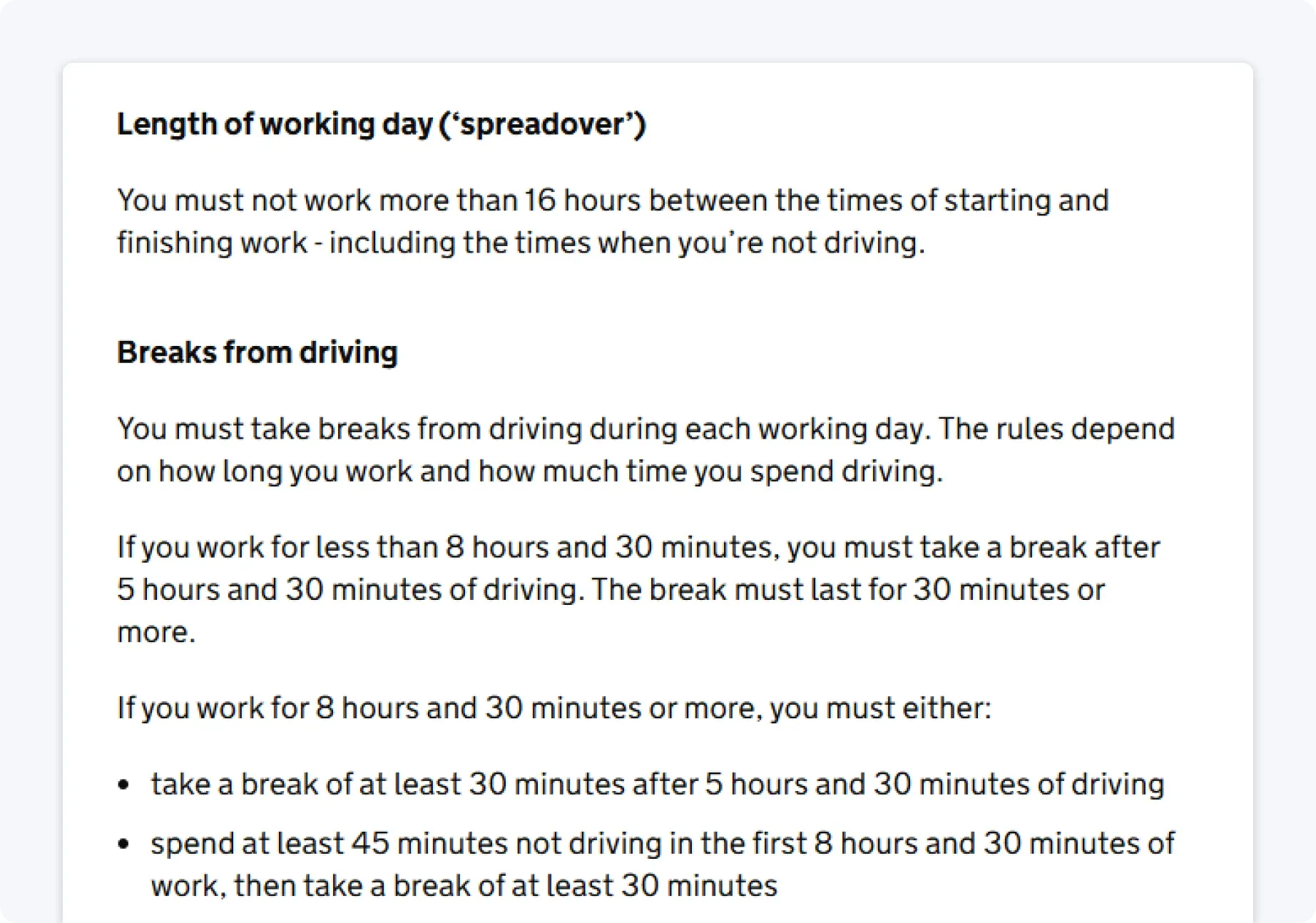
- Keep an eye on working hours so drivers don’t get fatigued. Following the UK Working Time Regulations is a must.
💡 You can’t work more than 48 hours a week on average, normally averaged over 17 weeks.
You can choose to work more by opting out of the 48-hour week if you drive vehicles under 3.5 tonnes using the GB Domestic drivers’ hours rules (check some of the rules below).
What it really costs to start a delivery business and pick the right vehicle
The startup costs vary widely depending on the scale and niche focus, such as local courier, food delivery, or specialised logistics.
Vehicle choices and costs
When it comes to delivery, your choice of vehicle really depends on what you’re delivering and where.
For urban, short-distance runs, small vans or electric cargo bikes are super popular.
A brand-new electric van can set you back around £55,000, while a used diesel van usually costs £25,000–£30,000.
Bikes, including electric options, are much cheaper upfront, around £2,200, but of course, they carry less cargo.
If you’re delivering food or other temperature-sensitive goods, you’ll need a refrigerated truck.
These are bigger investments, often £50,000–£80,000, but many businesses choose to lease instead to spread the cost, with monthly payments usually between £500–£1,500.
Communication and technology
Running a delivery business smoothly means having the right tech on your side. Essentials include smartphones, sat navs, and route management software.
A basic routing and tracking system usually costs between £800 and £2,000, but the efficiency gains often pay for themselves in just six months.
Beyond the basics, there are other handy tools to consider: order management systems, digital proof-of-delivery apps, and customer-facing apps, which help keep your operations organised and your clients happy.
Overall budget range:
- A basic bike-based operation can launch with as little as £5,000–£10,000.
- A small van operation will generally need between £40,000 and £50,000 for vehicle purchase and setup.
- Larger, refrigerated or fleet-based operations may require over £100,000, depending on scale.
Also, initial one-time startup costs (vehicle purchase, insurance, permits, technology, website, marketing)can total approximately £19,430.
In addition, monthly recurring costs (fuel, maintenance, insurance, technology subscription, marketing, salary, rent, etc.) are about £4,130.
How to attract your first customers when doing a delivery business?
Getting your first customers is about mixing digital and local marketing strategies that match your audience. Here’s how to do it:
Digital marketing tips
- Social media: Set up clear, professional profiles on Instagram, Facebook, and LinkedIn. Share engaging posts and stories, and consider targeted ads to get noticed by the right people in your area.
- Email marketing: Collect emails from leads and send a warm welcome campaign with special discounts or offers. Automated follow-ups (drip campaigns) can turn interest into paying customers.
- SEO & content: Write localised content and blogs about your delivery services to improve search engine rankings. It helps people find you and builds trust over time.
- Referral programs: Encourage early customers to refer friends or businesses by offering rewards or discounts. Don’t forget that the word-of-mouth is powerful.
- Partnerships: Team up with local restaurants, shops, or e-commerce sellers to become their preferred delivery partner and tap into their existing customer base.
Getting involved locally
- Community events & sponsorships: Sponsor local activities or charity events to get your name out there and build goodwill.
- Flyers & print ads: Distribute eye-catching flyers in busy neighbourhoods or near potential client businesses.
- Networking: Attend local business meetups to connect, share your services, and spread the word.
Stand out with your service
- Speed & reliability: Promote same-day or next-day delivery options.
- Transparent pricing & tracking: Make costs clear and offer real-time tracking to build trust.
- Customer service: Deliver top-notch support to earn glowing reviews and repeat business.
By combining personalised digital outreach with a strong local presence and smart partnerships, you’ll have a solid foundation for winning your first customers and growing your delivery.
Which customer segments offer the highest lifetime value for delivery startups?
| Customer segment | Characteristics | Why is it high lifetime value (CLV) |
| Business clients and eCommerce retailers | Regular, reliable logistics needs.High-volume recurring orders. Contract partnerships | Stable revenue streams.Contractual retentionVolume discounts |
| Subscription and loyalty customers | Consumers subscribing to regular delivery plans for groceries, meals, or essentials. | Predictable usage patterns.Consistent monthly revenue.Reduced churn |
| Urban frequent users | Individuals in dense urban areas with frequent orders of food, groceries, and courier services | High purchase frequency; respond well to personalised offers and loyalty programs |
| Premium and specialised delivery customers | Require urgent, same-day, or specialised deliveries (fragile, medical supplies) | Pay higher rates.Prioritise quality over price.Valuable for premium pricing. |
💡 Focusing on these customer groups lets you keep your best clients happy, spend your marketing budget wisely, and create loyalty programs that really work, helping you get the most value from every customer.
What do you need to know about taxes when starting your delivery business?
Understanding the tax landscape is essential for compliance and financial planning.
Business structure and tax obligations
- Sole traders need to register for Self Assessment with HMRC once income exceeds the £1,000 trading allowance. They report income annually and pay income tax and National Insurance Contributions (NICs).
- Limited companies pay corporation tax (25% for profits over £250k, 19% under £50k) and are subject to dividend taxation rules.
- VAT registration is mandatory if turnover exceeds £90,000 annually; VAT returns must then be filed digitally via Making Tax Digital (MTD) software.
With ANNA, you get all your taxes covered: Payroll, VAT filing, and Corporation Tax, including Self Assessment.
📢 Important dates and compliance
- Register for Self Assessment by 5th October following the tax year.
- Submit income tax returns by 31 October (paper) or 31 January (online) the following year.
- Pay any tax owed by 31 January.
- From April 2026, MTD for income tax applies to sole traders with income over £50,000, requiring quarterly digital filings.
Also, you can claim tax relief on vehicle-related expenses, including fuel, insurance, repairs, MOT, leasing costs, and parking fees.
6 Common mistakes to avoid when starting a UK delivery business
Starting your delivery business is great, but there are some common pitfalls to watch out for:
- Skipping market research: Don’t dive in blind. Understanding your customers, competitors, and local demand is essential to offer the right services and generate revenue.
- Underestimating costs: Fuel, vehicle maintenance, driver wages, insurance, and tech subscriptions add up. Overlooking them can quickly create cash flow headaches.
- Using inefficient delivery systems: Outdated or manual dispatch methods slow down deliveries, raise costs, and frustrate customers.
- Over-promising delivery times: Be realistic. Overstating speed can damage your reputation. Clear communication and efficiency go hand in hand.
- Neglecting customer communication: Always update customers on delays or issues. Poor communication leads to dissatisfaction and lost repeat business.
- Ignoring legal and tax requirements: Skipping insurance, licensing, tax registration, or data protection compliance can result in fines or worse, business closure.
How to start your delivery business hassle-free with ANNA?
ANNA is an all-in-one business account for money, invoicing, expenses, bookkeeping and taxes.
Here’s what ANNA delivers:
🚚 Quick company setup: Register your company in just one day, with a handy name checker to help you pick a name that really works for your brand.
🚚 Stress-free tax support: From VAT and payroll to Corporation Tax, ANNA keeps you fully HMRC-compliant without the headache.
🚚 Automatic filings & reminders: MTD Self Assessment, PAYE, VAT returns, Corporation Tax — ANNA calculates and files them automatically, and sends friendly reminders so you never miss a deadline.
🚚 Smart receipt scanning: Snap a photo of any receipt, and ANNA instantly matches and categorises it for you.
🚚 Money pots: Every payment you receive automatically sets aside money for tax, so you’re never caught off guard.
🚚 Real-time tax estimates: Know how much you owe at any point in time, no surprises
🚚 Bookkeeping score: Quick, actionable tasks help you improve your records and reduce your tax bill.
🚚 Professional invoicing: Create branded invoices and accept payments via a unique link or QR code, simple and professional.
Try ANNA today and put your delivery business on the fast track.
Read the latest updates


![What Is Marginal Relief? [Everything You Need to Know]](https://storage.googleapis.com/anna-website-cms-prod/small_cover_3000_130_1ef44f67d1/small_cover_3000_130_1ef44f67d1.webp)





You may also like
![How to Start a Home Cleaning Business in the UK? [Guide]](https://storage.googleapis.com/anna-website-cms-prod/small_Cover_3000_Landscaping_Business_Names_Creative_Name_Ideas_238520116c/small_Cover_3000_Landscaping_Business_Names_Creative_Name_Ideas_238520116c.webp)
![How to Start a Poultry Farm Business in the UK? [Guide]](https://storage.googleapis.com/anna-website-cms-prod/small_Cover_3000_Landscaping_Business_Names_Creative_Name_Ideas_60080689ee/small_Cover_3000_Landscaping_Business_Names_Creative_Name_Ideas_60080689ee.webp)
![How to Start a Fitness Business in 2026 [Step-by-Step Guide]](https://storage.googleapis.com/anna-website-cms-prod/small_Cover_3000_Landscaping_Business_Names_Creative_Name_Ideas_aaa987e130/small_Cover_3000_Landscaping_Business_Names_Creative_Name_Ideas_aaa987e130.webp)
![How to Start a Hotel Business in the UK? [Complete Guide]](https://storage.googleapis.com/anna-website-cms-prod/small_Cover_3000_How_to_Start_a_Car_Detailing_Business_Successfully_e82eaba3bd/small_Cover_3000_How_to_Start_a_Car_Detailing_Business_Successfully_e82eaba3bd.webp)

![How to Start a Petrol Station Business in the UK [Guide]](https://storage.googleapis.com/anna-website-cms-prod/small_Cover_3000_Landscaping_Business_Names_Creative_Name_Ideas_78f637cb9c/small_Cover_3000_Landscaping_Business_Names_Creative_Name_Ideas_78f637cb9c.webp)
![How to Start a CBD Oil Business in the UK? [Complete Guide]](https://storage.googleapis.com/anna-website-cms-prod/small_Cover_3000_Landscaping_Business_Names_Creative_Name_Ideas_8e3b596ec1/small_Cover_3000_Landscaping_Business_Names_Creative_Name_Ideas_8e3b596ec1.webp)

![How to Start a Massage Therapy Business? [Complete Guide]](https://storage.googleapis.com/anna-website-cms-prod/small_Cover_3000_Landscaping_Business_Names_Creative_Name_Ideas_99e255e6ff/small_Cover_3000_Landscaping_Business_Names_Creative_Name_Ideas_99e255e6ff.webp)


![How to Start a Social Media Management Business? [Guide]](https://storage.googleapis.com/anna-website-cms-prod/small_Cover_3000_Landscaping_Business_Names_Creative_Name_Ideas_ffc57d2347/small_Cover_3000_Landscaping_Business_Names_Creative_Name_Ideas_ffc57d2347.webp)

![How to Start a Car Detailing Business Successfully [Guide]](https://storage.googleapis.com/anna-website-cms-prod/small_Cover_3000_How_to_Start_a_Car_Detailing_Business_Successfully_af5c929357/small_Cover_3000_How_to_Start_a_Car_Detailing_Business_Successfully_af5c929357.webp)
Open a business account in minutes
