
Merchant cash advance
A business cash advance on the sales you’re already making
Get £1,000 to £2,000,000 from YouLend and pay it back as a fixed share of your daily sales. Quiet day, smaller repayment. No sales, nothing to pay. Card machine, marketplace, or online checkout – it all counts.

 Up to £2 millionavailable based on your sales
 4 – 12 monthstypical repayment term
 £44.8malready advanced to ANNA customers
- 4.8 out of 5YouLend’s Trustpilot rating
What is a merchant cash advance?
A merchant cash advance gives your business a lump sum now, based on the revenue it’s already bringing in. You pay it back automatically as a small share of each day’s sales. It’s also called a business cash advance, and with ANNA it’s arranged through YouLend and paid straight into your ANNA business account.
A merchant cash advance (MCA) is business funding paid upfront and repaid as a fixed percentage of your future sales. There are no fixed monthly payments: you repay more when trading is busy and less when it’s quiet. The cost is one fixed fee, agreed before you sign.
You’ll also see it called a business cash advance, merchant funding, merchant financing, a merchant loan, a merchant advance loan, or revenue-based funding. Whatever the name, a merchant cash advance in the UK is the same idea: an advance on money your business is already earning.

Is a merchant cash advance a loan?
Not in the legal sense. Merchant loans in the UK and merchant loan advance products are usually set up as a purchase of a share of your future sales, not as borrowing with interest. So there’s no interest rate ticking up over time and no fixed repayment date. In practice, a merchant cash advance loan works a lot like short-term finance: you get money now and pay it back from what you earn.
How does a merchant cash advance work?
You get an offer based on your sales
YouLend looks at the revenue flowing through your business and offers up to about 2 months’ worth of it.
You agree one fixed fee
It’s set upfront and doesn’t grow over time.
You agree a repayment share
A fixed percentage of your daily sales goes towards the advance.
Repayments happen automatically
Each day, that share is taken from your sales. You don’t have to remember a thing.
A worked example
Say a café takes a £20,000 business cash advance with a fixed fee of 10%. The total to repay is £22,000. The agreed repayment share is 15% of daily sales.
At an average of £1,000 a day, the café clears the £22,000 in around 5 months. If trade slows, it simply takes a bit longer. The fee stays the same either way.
Illustrative figures only. Your fee and repayment share depend on your business and are confirmed by YouLend before you sign.
| Day | Sales | Repaid (15%) | Kept by the café |
|---|---|---|---|
| Busy Saturday | £1,600 | £240 | £1,360 |
| Normal Tuesday | £1,000 | £150 | £850 |
| Quiet Monday | £400 | £60 | £340 |
| Closed for a holiday | £0 | £0 | £0 |
What happens when sales go up or down?
Repayments move with your takings. That’s the whole point. A seasonal business – a beach kiosk, a Christmas market stall, a wedding venue – repays faster in the busy months and slower in the off season, without a fixed payment hanging over the quiet weeks.
Why get a merchant cash advance through ANNA

No card machine? No problem
Most merchant cash advance providers only count sales that go through a card terminal. YouLend looks wider: card machine takings, marketplace sales, and payment provider flows from the likes of eBay, Just Eat, Teya, and Dojo. Selling online counts too.
Yes, you can use it for a tax bill
There are no restrictions on what you spend the money on – including tax liabilities, which a lot of funders won’t touch. As a tax app, we know a big HMRC payment can land at the worst possible moment.

It lands in your account and your books
The money arrives in your ANNA business account, and repayments come out of the same place. Your bookkeeping in ANNA sees all of it, so the advance, the fee, and every repayment are already in your records.
Backed by real numbers
How much does a merchant cash advance cost?
With YouLend, it’s one fixed fee of between 3% and 25% of the amount funded. No interest, no origination fee, no hidden charges. You’ll never pay more than the amount agreed at the start. The rate depends on how much you take, the term, and your business’s risk profile.
Factor rate, fixed fee, and APR
Many MCA providers quote a factor rate instead of a fee. A factor rate of 1.2 means you repay £1.20 for every £1 advanced. A fixed fee says the same thing differently: a 20% fee is a factor rate of 1.2. So YouLend’s 3–25% fee range works out at a factor rate of 1.03–1.25. Across the UK market, factor rates of 1.1–1.5 are common.
What a merchant cash advance doesn’t have is an APR in the usual sense. APR assumes a fixed term, and an MCA ends whenever your sales finish repaying it. Pay it off fast and the annualised figure looks high, even though the pounds you pay are exactly the same. The number to compare is the total you repay.

Example costs
| Advance | Fixed fee | Factor rate | Total to repay |
|---|---|---|---|
| £5,000 | 8% (£400) | 1.08 | £5,400 |
| £20,000 | 10% (£2,000) | 1.10 | £22,000 |
| £100,000 | 15% (£15,000) | 1.15 | £115,000 |
Illustrative only. Your actual fee is set by YouLend based on your business.
Charges to check before you sign
Origination or admin fees
some providers add these on top. YouLend doesn’t.
Early settlement
you can repay YouLend early at any time, but the fixed fee doesn’t change, so paying early won’t save you money.
Top-ups
a new offer is priced on your circumstances at the time and may differ from your first.
Personal guarantee
YouLend may ask for one. More on that in the FAQ below.
How much can you get with a merchant cash advance?
With YouLend, anything from £1,000 to £2,000,000 – roughly up to 2 months of your revenue. The exact amount depends on how much your business turns over, how steady your sales are, your sector, and any other funding you already have.
Typical UK merchant cash advance vs ANNA + YouLend
| Typical UK merchant cash advance | ANNA + YouLend | |
|---|---|---|
| Amount | From a few thousand pounds, up to £1–2m | £1,000 – £2,000,000 |
| Minimum revenue | £1,000 – £20,000 a month in card sales | More than £1,000 a month in revenue |
| Sales that count | Mostly card terminal sales | Card terminal, marketplace, and payment provider sales |
| Trading history | Usually 3–6 months | At least 86 days of sales in your statements |
| Cost | Factor rate, often 1.1–1.5 | One fixed fee of 3–25% (factor 1.03–1.25) |
| Typical term | 3–18 months | 4–12 months |
| Effect of applying on your credit score | Varies by provider | Applying won’t affect it |
Market figures are typical ranges published by UK MCA providers and comparison sites, October 2026.
Who can get a merchant cash advance?
Most of it comes down to your sales. As a rough guide, YouLend wants to see:
- More than £1,000 a month in revenue
- At least 86 days of sales visible in your bank statements
- Trading activity in the last month
- A UK business
YouLend says 80% of pre-qualified customers go on to be approved. Any business cash advance in the UK depends on trading, not location – so whether you’re after a merchant cash advance in London, Manchester, or anywhere in between, the criteria are the same.

Sole traders and limited companies
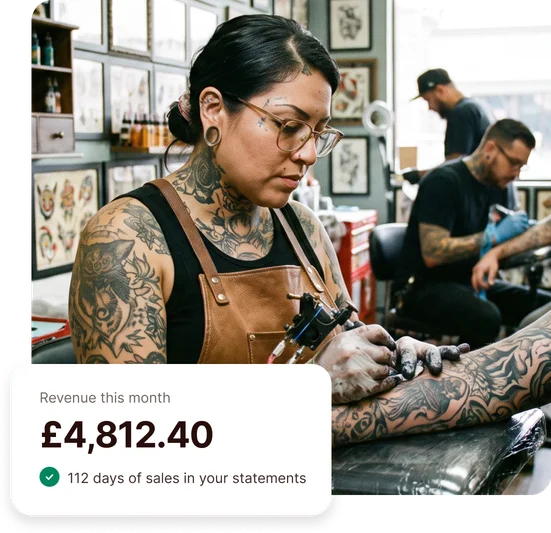
Limited companies can apply with their company details.
Bad credit and “no credit check”
If you’ve searched for “merchant cash advance no credit check”, here’s the honest version. Applying through ANNA won’t affect your credit score, and YouLend focuses on how your business is trading rather than on credit history alone. But it does look at your credit profile alongside your sales, affordability, recent borrowing, and online presence. A less-than-perfect credit history doesn’t rule you out – strong, steady sales count for a lot.

New businesses and startups
Because the offer is based on sales you’ve already made, a merchant cash advance isn’t for businesses that haven’t started trading yet. Once you have around 3 months of sales in your statements, you can check your eligibility.
Card machine and online sales
Card machine loans and PDQ funding are what most people picture when they hear “merchant cash advance”. YouLend counts those takings, plus marketplace and payment provider revenue. If you sell through eBay, Just Eat, or an online checkout, those sales count too.
What you’ll need
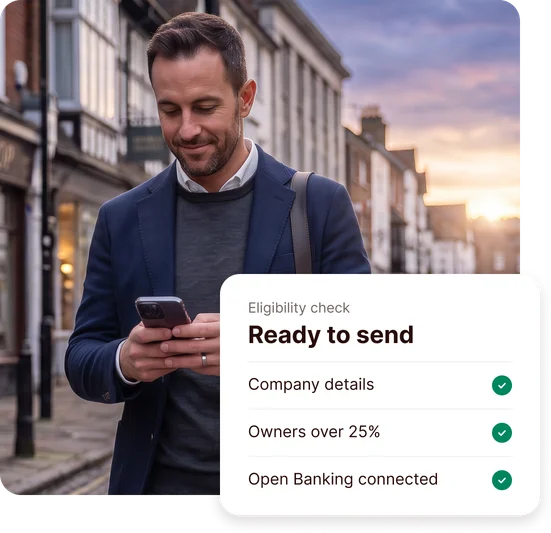
- Your company details
- Details for anyone who owns or controls more than 25% of the business: name, date of birth, home address, personal email, and mobile
- Your financials, through Open Banking or 3–12 months of business bank statements
What can you use a merchant cash advance for?
Whatever the business needs. A cash advance for small business owners is usually about timing, not size. The most common uses we see:
Paying a tax bill
without raiding your working capital

Stocking up
before a busy sales season
Covering payroll
through a slower month

Opening or refurbishing a site
a new shop, a second kitchen, a refit

Booking advertising
now, for when the season picks up

Covering an unexpected cost
before it becomes a problem
A small business cash advance suits businesses with steady, regular sales: retailers, restaurants and cafés, pubs and bars, salons, ecommerce sellers, and seasonal trades. Merchant cash advances for hospitality businesses are especially common, because takings swing so much week to week and repayments swing with them.
How a merchant cash advance shows up in your accounts and tax
This is the bit most providers skip. Here’s how it usually works.
In your books
The advance isn’t income. When it arrives, it’s recorded as money you owe, and each daily repayment reduces that balance. The fixed fee is the actual cost of the funding, and it’s normally recognised as a finance cost over the life of the advance.
Is the fee tax-deductible?
Usually, yes. If you use the money for your business, the fee is generally treated as a business finance cost, which reduces your taxable profit – for Corporation Tax if you run a limited company, or for Self Assessment if you’re a sole trader. The advance itself isn’t taxable, and the repayments of the advance aren’t an expense.
VAT
Funding fees are generally exempt from VAT, so there’s no VAT to reclaim on the fee.
With ANNA
Because the funding lands in your ANNA business account, the advance, the fee, and every repayment are already in your bookkeeping. If you use Auto Accountant, it’s all there when your accounts and tax returns are prepared.
Merchant cash advance pros and cons
Pros
- Repayments flex with your sales – quiet day, smaller repayment
- No fixed monthly payment
- One fixed fee, agreed upfront
- Decisions in days, not weeks
- Based on your sales, not your assets – no property needed as security
- Applying won’t affect your credit score
Cons
- Usually costs more than a traditional bank loan
- A share of every day’s sales goes to repayments, which can squeeze margins
- Paying early doesn’t reduce the fee
- Not available until you have a few months of trading
- A personal guarantee may be required
Merchant cash advance vs business loan
| Traditional business loan | Merchant cash advance with YouLend | |
|---|---|---|
| Decision | Weeks | Days, not weeks |
| Application | Forms from scratch | Company details plus Open Banking or statements |
| Cost | Interest that builds up over time | One fixed fee, agreed upfront |
| Repayment | Fixed monthly amount, good month or bad | A fixed share of daily sales |
| Based on | Assets and credit history | The revenue you’re already generating |
| Credit score | Applying can leave a mark | Applying won’t affect it |
A bank loan is usually cheaper if you can wait and your income is predictable. A merchant cash advance makes more sense when speed matters and your sales go up and down.
Other options worth knowing
Business overdraft
a flexible buffer for small, short gaps, with interest charged on what you use.
Business credit card
handy for everyday spending, but expensive if you carry a balance.
Invoice finance
better for B2B businesses waiting on unpaid invoices rather than daily sales.
Revenue-based financing
a close cousin of the merchant cash advance, often used by online and subscription businesses and repaid from monthly revenue.

How to apply for a merchant cash advance
Decisions come in days, not weeks, and the money is paid straight into your ANNA business account. An offer isn’t binding, so plenty of people check simply to plan ahead. Already an ANNA customer? If you’re pre-qualified, you’ll see it in the app.
Direct lender or broker? With ANNA, YouLend is the merchant cash advance provider that funds you directly, and ANNA introduces you. There’s no broker in the middle.
Download the ANNA app.
It’s free to get started, on iOS and Android.
Open your ANNA business account.
You’ll get an account number, sort code, and an ANNA card to start trading with.
Check your eligibility for funding.
Share your company details and connect through Open Banking or upload 3–12 months of statements.
Merchant cash advance FAQ
A merchant cash advance isn’t a loan in the legal sense. It’s an advance on your future sales, repaid as a fixed share of them, with one fixed fee instead of interest. In practice it does a similar job to short-term business finance: money now, paid back from what you earn.
With YouLend, a merchant cash advance costs one fixed fee of 3–25% of the amount funded, agreed before you sign. There’s no interest and no origination fee, and you’ll never repay more than the amount agreed at the start.
Typical terms run 4–12 months. There’s no fixed end date: the advance is repaid as a share of your daily sales, so it finishes sooner when trading is strong and takes a little longer when it’s quiet.
Possibly. Applying won’t affect your credit score, and YouLend focuses on how your business is trading. It still looks at your credit profile alongside your sales and affordability, so no provider can honestly promise no credit check at all.
Yes – YouLend looks at what your business sells rather than how it’s set up. You’ll need steady sales of more than £1,000 a month and at least 86 days of trading in your statements.
No. YouLend counts card machine takings, but also marketplace sales and payment provider flows from the likes of eBay, Just Eat, Teya, and Dojo. You can keep using the card machine and payment providers you already have.
Yes, you can repay a merchant cash advance early at any time. The fixed fee doesn’t change, though, so paying early won’t save you money. It’s worth a chat with YouLend first.
Because repayments are a share of your sales, a slow day means a smaller repayment automatically. If sales drop significantly and stay down, contact YouLend as soon as you can – ideally before you’re 2 weeks behind – and their team will talk through the options.
YouLend may ask for a personal guarantee as extra security. It only makes an offer when it believes the business can meet the repayments, so the guarantee is a safeguard rather than something expected to be used. It won’t appear on your personal credit file or on your company’s Companies House record.
You may be able to top up a merchant cash advance once you’re part-way through repaying, subject to YouLend’s criteria. You can also apply again once it’s fully repaid. Only one facility is repaid at a time.
A merchant cash advance is a commercial funding product for business purposes only, so it isn’t regulated in the same way as consumer credit. That makes it worth reading the terms carefully: check the total you’ll repay, the repayment share, and whether a personal guarantee is needed.
Decisions come in days, not weeks. Once you accept the offer, the money is paid straight into your ANNA business account.
Funding is provided by YouLend, not ANNA. ANNA introduces customers to YouLend and does not lend. Eligibility criteria apply and not all businesses will qualify. Funding amounts, fees, and terms depend on your business’s circumstances and are confirmed by YouLend before you sign. A personal guarantee may be required. This is a commercial funding product for business purposes only and is not regulated in the same way as consumer credit.
Unlock up to £2m in business funding
Pay it back as a fixed share of your daily sales. On quiet days you pay less, on busy days you pay more. No sales today? Nothing to pay.